How to Manually Override LCI Electric Jacks on Your RV
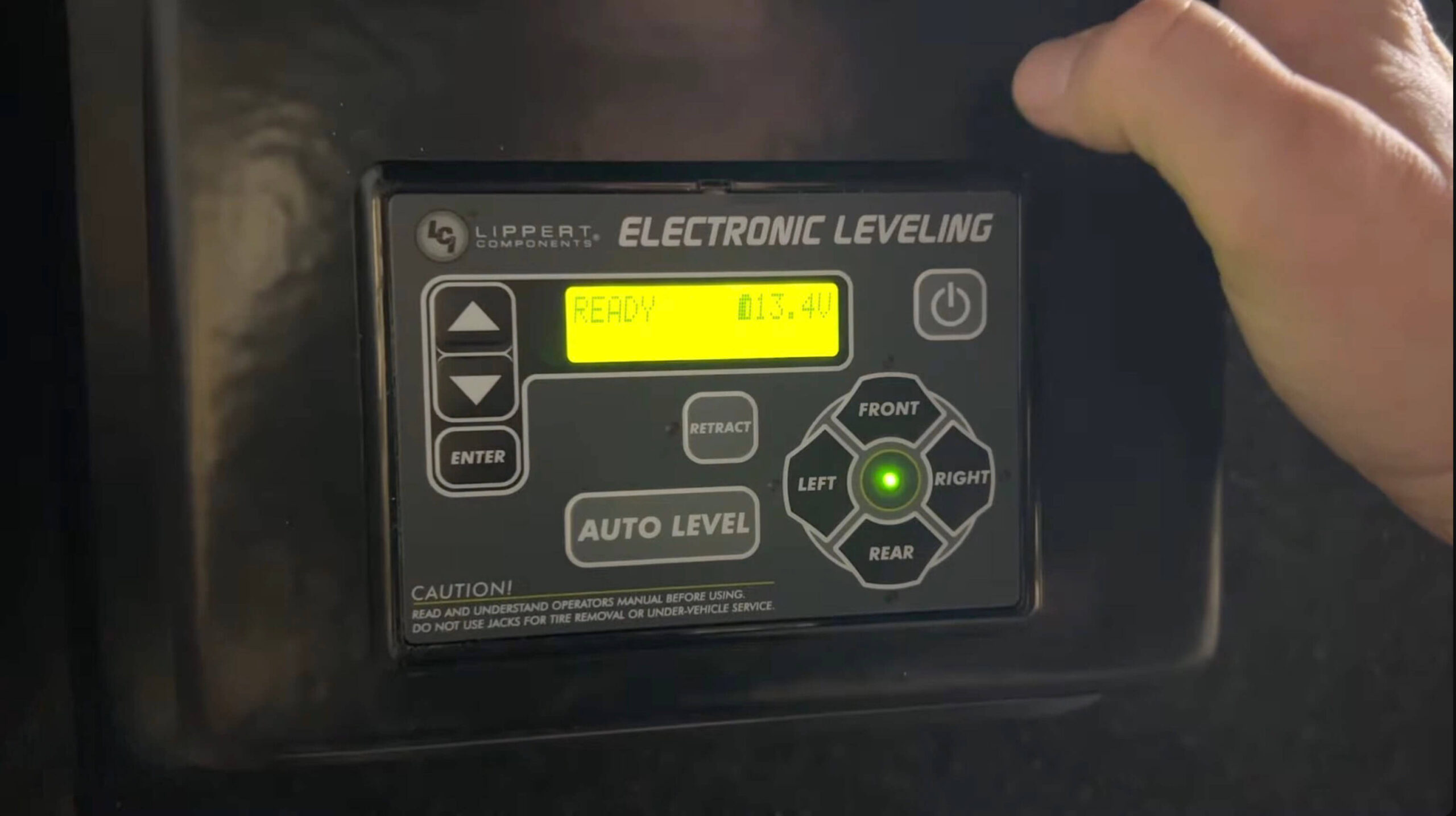
If your LCI electric jacks ever stop responding, don’t panic. You can still move your RV safely.
In this guide, we’ll go over how to manually override both the front landing gear jacks and the rear stabilizer jacks so you can retract or extend them even without power.
Hey Happy Campers!
Todd here from Great American RV SuperStores.
Today we’re talking about how to manually override your LCI electric jack system.
Whether you’ve got a dead battery, a tripped fuse, or an error on your leveling display, this simple process will get you back in motion.
Before You Start
Before doing any manual override, take a minute to check your power supply.
This system is very sensitive to 12-volt power.
Make sure:
- Your battery is charged and in good condition.
- You have a working converter if you’re plugged into shore power.
- Your wiring and 30-amp fuses on the jack control board are intact.
If your jacks still won’t move or you just need to retract them manually, here’s how to do it.
Front Landing Gear Override
Step 1: Disconnect Power
Unplug the two connectors going into the jack motor.
This removes power from the system so it won’t try to move on its own.
Step 2: Remove the Rubber Plug
At the bottom of the motor, you’ll see a small rubber plug where the wiring enters.
Pull that plug out to reveal the manual override access point.
Step 3: Attach Your Socket
Use a 5/16-inch socket with an extension and a 3/8-inch drive (manual or power drill).
Insert it into the hole until it seats onto the bolt inside.
Step 4: Operate the Jack
- Turn the socket forward to retract the jack.
- Turn it in reverse to extend the jack.
You can use a drill or hand tool. Go as slow or fast as you need. Once fully retracted, you’re safe to travel.
Rear Jack Override
The process is nearly identical for the rear jacks.
Step 1: Unplug Connectors
Disconnect both power plugs from the rear motor.
Step 2: Remove the Rubber Plug
Pull out the small rubber cover at the base of the jack motor.
Step 3: Insert Your Socket
Again, use a 5/16-inch socket with an extension.
Step 4: Operate the Jack
- Forward motion retracts the jack.
- Reverse motion extends it.
You’ll see the jack move slowly as you operate it. When you’re done, plug everything back in to prevent dirt or moisture from getting inside the connectors.
Pro Tips
- Always unplug your power leads before using a drill or hand tool for override.
- Label your connectors (front and rear) if they look similar to avoid confusion.
- Once power is restored, reconnect everything and perform a system reset or auto level as usual.
Final Thoughts
That’s all there is to it.
If you find yourself stuck with nonresponsive jacks, a simple 5/16-inch socket and a drill are all you need to retract or extend them manually.
For full instructions on LCI auto leveling, zero point setup, or troubleshooting, head over to our Hap’s Helpful Hacks playlist on YouTube.
Frequently Asked Questions About LCI Electric Jack Manual Override
Why do LCI electric jacks stop working in the first place?
Most jack failures are not mechanical. The most common causes are:
- Low 12-volt battery voltage
- Blown 30-amp fuse on the jack control board
- Poor ground connection
- Tripped breaker or corroded wiring
Electric jacks draw a high amount of current under load. If voltage drops too low, the control board may stop sending commands even though nothing is physically broken.
Is it safe to manually override electric jacks?
Yes — when done correctly. LCI designs electric jack motors with a manual drive bolt specifically so the jack can be moved without power.
However, power must always be disconnected before override to prevent backfeeding voltage into the motor or control board. This is why unplugging the motor connectors is a critical first step.
Why is unplugging the motor necessary before override?
Unplugging the motor ensures:
- The jack won’t try to move unexpectedly
- Voltage isn’t fed back into the control board
- Internal motor windings aren’t damaged
The manual override is strictly mechanical. Leaving power connected while turning the motor can cause electrical damage or unpredictable movement.
Can I use a drill, or should I only turn it by hand?
Either method is acceptable as long as you stay in control.
Using a drill can save time, especially on front landing gear, but speed should be kept moderate. High-speed operation can overheat the gearbox or strip internal components if resistance is encountered.
Which direction retracts or extends the jack?
On most LCI electric jacks:
- Clockwise (forward) rotation retracts the jack
- Counterclockwise (reverse) rotation extends the jack
Always watch the jack while operating. If movement isn’t what you expect, stop immediately and reassess.
Do I need to override both landing gear legs?
Yes. Landing gear systems are designed to operate in pairs. Retracting one leg significantly more than the other can twist the RV frame.
When manually overriding landing gear, alternate between legs and keep them as even as possible to reduce stress on the frame and gearboxes.
Are rear stabilizer jacks different from landing gear?
Yes. Rear stabilizer jacks carry less load and are designed only to reduce movement once the RV is already level.
They are not designed to lift or level the RV, and should never be used for that purpose. The override process is the same, but movement will usually be slower.
Can manual override damage the jack system?
Manual override itself does not cause damage when used correctly. Problems typically occur when:
- Power is left connected
- The jack is forced beyond its travel limits
- Resistance or binding is ignored
If a jack feels unusually hard to turn, stop immediately and inspect for obstructions or mechanical issues.
What should I do after power is restored?
Once power is back:
- Reconnect all motor plugs
- Check fuses and breakers
- Operate the jacks briefly using normal controls
If your RV has an auto-leveling system, running a normal retract or auto-level cycle helps confirm everything is synchronized before travel.
When should I call for service instead of overriding?
Manual override is a recovery method, not a permanent solution. Professional service is recommended if:
- Jacks repeatedly stop under load
- Motors run but jacks don’t move
- You hear grinding, clicking, or binding
- Fuses continue to blow
Repeated faults usually indicate wiring, motor, or control board issues that need proper diagnosis.
Common Manual Override Mistakes (And How to Avoid Them)
Manual override is designed as a safety backup, but most damage doesn’t happen because someone didn’t know how to override a jack — it happens because they rushed or skipped a step. These are the most common mistakes RV owners make and how to avoid turning a simple override into a bigger problem.
Leaving Power Connected During Override
This is the number one mistake. If the motor is still plugged in while you’re turning the jack manually, you risk backfeeding voltage into the control board or motor. That can fry components instantly or create erratic jack movement.
Always unplug the motor connectors before inserting a socket or drill. No exceptions.
Using a High-Speed Impact or Hammer Drill
A manual override bolt is not designed for impact tools. Using one can strip gears, damage the gearbox, or shear internal components — especially if the jack binds.
If you use a drill, keep it slow and controlled. If resistance increases, stop and investigate. Faster is not better here.
Retracting One Landing Gear Leg All the Way First
Landing gear is designed to work as a pair. Fully retracting one leg while the other is still down can twist the RV frame and put uneven stress on the gearboxes.
Alternate between legs and keep them as even as possible during manual retraction. It takes a little longer, but it prevents expensive damage.
Forcing a Jack That Doesn’t Want to Move
If a jack suddenly becomes very hard to turn, that’s a warning sign. Dirt, corrosion, bent components, or internal damage can all cause binding.
Forcing it can strip gears or break the screw assembly. If resistance feels abnormal, stop and inspect the jack before continuing.
Assuming Stabilizer Jacks Can Lift the RV
Rear stabilizer jacks are not designed to lift or level an RV. They are meant only to reduce movement once the RV is already supported by landing gear or leveling jacks.
Trying to lift weight with stabilizers can bend arms, damage motors, or pull mounting hardware loose from the frame.
Forgetting to Reinstall Rubber Plugs and Connectors
After a manual override, it’s easy to focus on getting moving and forget the small stuff. Leaving rubber plugs out or connectors unplugged allows dirt, moisture, and road grime into the motor housing.
Before travel, reinstall all plugs and reconnect all wiring to prevent future failures.
Driving Off Without Testing After Power Is Restored
Once power is restored, many owners immediately hook up and leave. That’s a mistake.
Always run the jacks briefly using normal controls to confirm:
- Motors respond correctly
- No unusual noises are present
- Both legs move evenly
Catching a problem in the driveway is a lot better than discovering it at the next campsite.
Treating Manual Override as a Fix Instead of a Backup
Manual override is a recovery tool — not a repair. If you find yourself needing it more than once, there’s an underlying issue that needs attention.
Repeated overrides usually point to voltage problems, wiring faults, failing motors, or control board issues that should be properly diagnosed.
Why These Mistakes Matter
Electric jacks are simple systems, but they carry heavy loads. Small errors during manual override can turn a minor inconvenience into bent frames, stripped gearboxes, or expensive electrical repairs.
Taking an extra few minutes and following the correct process protects both your RV and your wallet.
Watch the Full Walkthrough
Check out this video on our Great American RV YouTube channel to see the full override process in action.
Need Help or Service?
If your LCI system keeps faulting or you’re unsure about wiring or fuses, stop by your nearest Great American RV SuperStores location.
Our service team can check voltage, recalibrate your system, and make sure you’re road-ready.
Like, share, and subscribe on YouTube, TikTok, or wherever you follow us.
Here at Great American RV SuperStores, we bring the how-to to you.
*This content is not a legal standard or regulation, and does not create any new legal obligation. It is advisory in nature, informational in content, and is intended to assist and educate consumers in the use and enjoyment of their recreational vehicles. Great American RV SuperStores does not hereby make any warranty, express or implied, and does not assume any liability with respect to the use of, or damages resulting from the use of any information, method or process included in this content.
Recent Comments