Using RV Stabilizer Jacks Correctly: What They Do and What They Don’t
Towing an RV is not just about hooking up and hitting the road. It is about making sure every connection, light, and brake system is working properly before you even start your engine. A few simple checks can be the difference between a smooth, stress-free trip and a dangerous situation.
At Great American RV SuperStores, we believe that safe towing is smart towing, and that confidence on the road starts with preparation.
Hey Happy Campers!
Todd here with Great American RV SuperStores.
Today we’re talking about RV stabilizer jacks — one of the most misunderstood components on a camper. Many RV owners assume stabilizer jacks are meant to lift or level their RV, but that is not what they were designed to do.
Understanding what stabilizer jacks are actually for — and how to use them correctly — can prevent damage, improve comfort at the campsite, and save you from an expensive repair.
Let’s break it down.
What Stabilizer Jacks Are Designed to Do
Stabilizer jacks are often called “stab jacks,” and the nickname actually explains their purpose perfectly. Their job is to stabilize your RV once it is already parked and leveled.
When people walk around inside an RV, the frame naturally flexes. This can cause the camper to rock or bounce slightly. Stabilizer jacks help reduce that movement by creating additional support points between the frame and the ground.
They are designed to:
- Reduce side-to-side movement
- Reduce front-to-back rocking
- Improve comfort when walking inside the RV
- Take stress off the suspension while parked
What they are not designed to do is lift or level the RV. That job belongs to leveling systems, tongue jacks, landing gear, or leveling blocks depending on your RV type.
How Stabilizer Jacks Protect Your RV Frame
Another benefit of using stabilizer jacks correctly is the way they help protect the RV frame while you’re parked.
When an RV is supported only by its wheels and hitch points, the frame still carries a lot of movement whenever people walk around inside. Over time, that constant shifting can put stress on cabinets, slide openings, door frames, and other structural areas.
By adding stabilizer jacks to the corners of the RV, you distribute that movement across additional contact points with the ground. This helps reduce frame flex and keeps the camper feeling tighter and more solid while parked.
This is especially important for longer travel trailers and fifth wheels. The longer the frame, the more noticeable movement can be when people walk from one end of the RV to the other. Properly positioned stabilizer jacks help minimize that effect.
However, it’s important to remember that stabilizer jacks are assisting the frame, not supporting the full weight of the RV. They should always be used after the camper is fully leveled and secured.
Think of stabilizer jacks as the finishing step of campsite setup. They don’t replace leveling equipment, but when used correctly they help your RV feel more stable, comfortable, and protected during your stay.
Why Stabilizer Jacks Are So Often Misused
One of the reasons stabilizer jacks are misunderstood is because they look similar to lifting jacks.
When people see a jack under the RV, their instinct is often to crank it down until the RV lifts slightly. Unfortunately, that is exactly what should never happen.
Stabilizer jacks are built to handle light stabilizing pressure, not the full weight of the RV.
Trying to lift the RV with stabilizer jacks can cause:
- Bent jack arms
- Broken gears
- Twisted mounting brackets
- Frame stress
- Hydraulic or electric motor failure (on powered systems)
Damage caused by using stabilizer jacks incorrectly is typically not covered under warranty, because they are clearly labeled as stabilization equipment rather than lifting equipment.
The Correct Order for Setting Up Your RV
Before you ever lower your stabilizer jacks, there is a proper sequence for setting up your RV at the campsite.
Following this order ensures the camper is supported correctly and prevents unnecessary stress on the frame.
Step 1: Level the RV Side-to-Side
Use leveling blocks under the wheels if needed. This should always be done before unhooking a travel trailer from the tow vehicle.
Step 2: Level Front-to-Back
For travel trailers, use the tongue jack to level the RV front to back.
For fifth wheels, the landing gear handles this job.
Step 3: Chock the Wheels
Always chock the wheels before lowering stabilizer jacks. This prevents the RV from shifting while people move inside.
Step 4: Deploy Stabilizer Jacks
Once the RV is level and secure, stabilizer jacks can be lowered to reduce movement.
The Right Way to Set Stabilizer Jacks
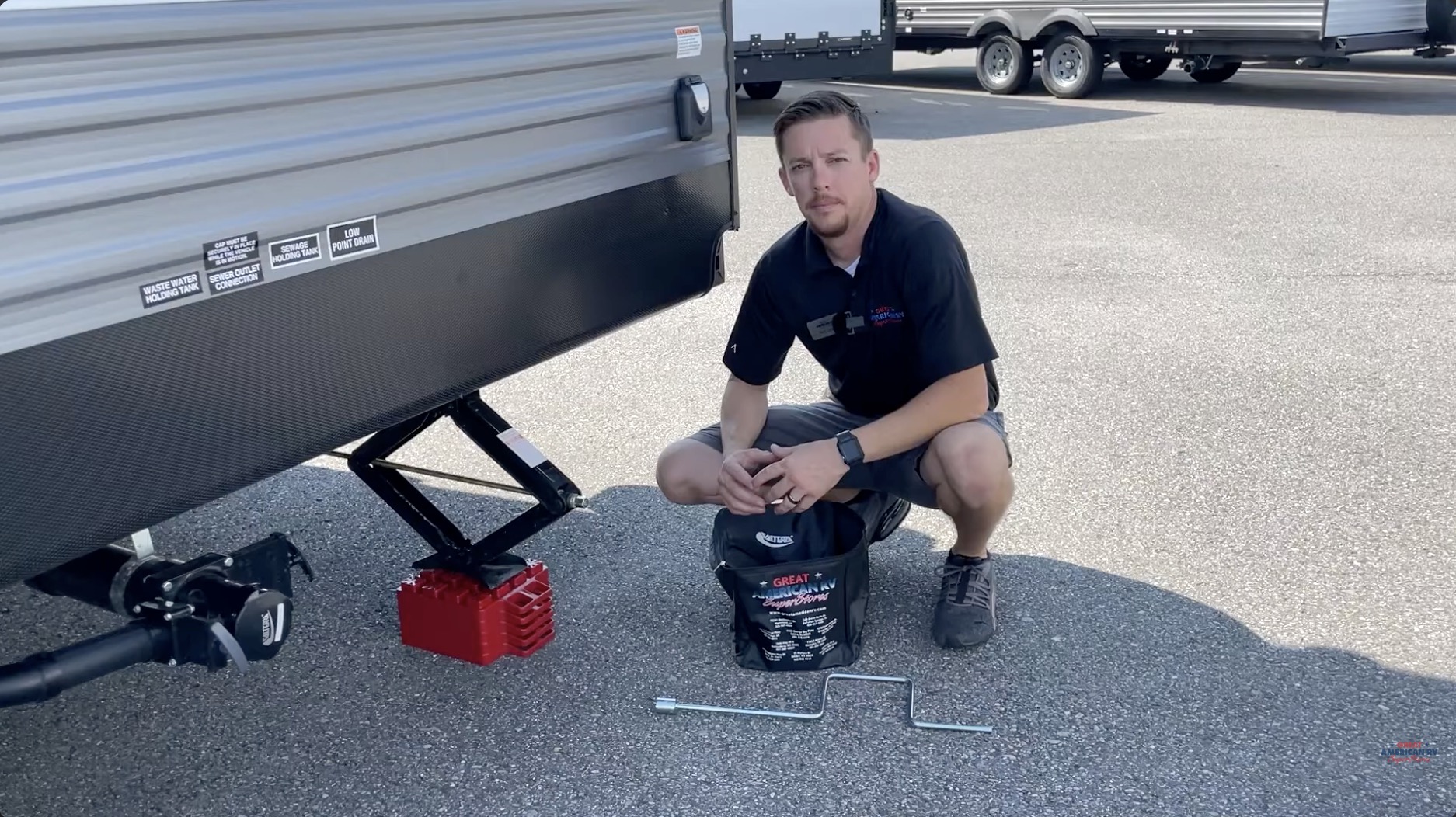
One of the best practices when lowering stabilizer jacks is to place blocks underneath them first.
Stackable leveling blocks work great for this purpose. Carrying two sets is a good idea because campsites are rarely perfectly flat, especially at state parks or older campgrounds.
Using blocks helps in several ways:
- Reduces how far the jack must extend
- Keeps the jack in a stronger operating position
- Prevents unnecessary strain on the mechanism
- Improves overall stability
Once blocks are in place, lower the stabilizer jack until it just makes firm contact with the block or ground.
Then apply slight pressure — not enough to lift the RV, but enough to remove some of the movement.
The Diamond Shape Rule
One of the easiest ways to know if your stabilizer jacks are positioned correctly is by looking at the angle of the jack arms.
When stabilizer jacks are applied correctly, the arms should form a side-to-side diamond shape.
This angled configuration is where the jack gets its strength.
When weight shifts inside the RV, the angled arms absorb movement and distribute the load properly.
If the jack is extended too far vertically, that diamond shape disappears and the jack loses strength.
What Not to Do
There are a few common mistakes that RV owners make when using stabilizer jacks.
Avoiding these will prevent most jack failures.
Never Lift the RV With Stabilizer Jacks
Stabilizer jacks are not designed to support the full weight of the RV.
If a tire comes off the ground, you are putting far too much pressure on the jack.
Never Use Stabilizer Jacks for Leveling
Leveling should always be done using leveling blocks, tongue jacks, landing gear, or hydraulic leveling systems.
Avoid Fully Vertical Jack Positions
Running stabilizer jacks straight up and down puts excessive stress on the mechanism.
The diamond shape is key to proper function.
Do Not Over-Tighten
Electric stabilizer jacks in particular can be damaged if the motor continues pushing after the jack is fully loaded.
Apply light pressure only.
Why Blocks Make a Big Difference
Blocks are one of the simplest ways to improve stabilizer jack performance.
Without blocks, stabilizer jacks may need to extend several inches to reach the ground. The farther a jack extends, the weaker it becomes.
By placing blocks underneath the jack foot, you reduce the extension length and keep the jack working in its strongest range.
Blocks also help when campsites have:
- Gravel pads
- Soft dirt
- Uneven ground
- Sloped surfaces
A stable base creates a more stable RV.
Different Types of Stabilizer Jacks
Not all stabilizer jacks are the same. Depending on the RV, you may see different styles.
Scissor Jacks
These are the most common on travel trailers.
They use a screw mechanism that expands the jack arms in a scissor motion.
Electric Stabilizer Jacks
Some RVs use electric motors to extend and retract stabilizer jacks.
These operate faster but still follow the same rule: stabilize, don’t lift.
Drop-Down Stabilizers
Often used on pop-ups or lightweight trailers, these deploy quickly but provide less stabilization than scissor jacks.
Regardless of the style, the purpose is always the same — reduce movement after leveling.
Setting Expectations at the Campsite
Even when stabilizer jacks are set correctly, you will still feel some movement inside the RV.
That is normal.
The goal of stabilizer jacks is movement reduction, not total elimination.
Large RVs with longer frames may still flex slightly when people move from one end to the other.
Stabilizer jacks simply make the RV feel more solid and comfortable.
Helpful Tips From the Service Department
After working on thousands of RVs, there are a few habits we recommend.
• Carry extra leveling blocks
• Inspect stabilizer jacks periodically
• Lubricate moving parts when recommended
• Check mounting bolts occasionally
• Avoid forcing electric motors
If a stabilizer jack starts making grinding noises, bending, or moving unevenly, it’s best to stop using it and have it inspected.
Small problems can become expensive repairs if ignored.
Frequently Asked Questions
Can stabilizer jacks lift the RV at all?
No. If the RV begins lifting when the jack is applied, too much pressure is being used.
Should stabilizer jacks touch the ground firmly?
Yes, but only with light pressure. Their job is to stabilize, not support the RV’s full weight.
Why do my stabilizer jacks bend?
Most bending happens when jacks are extended too far vertically or used to lift the RV.
Do fifth wheels use stabilizer jacks?
Yes. Fifth wheels typically have stabilizers in the rear while the landing gear handles leveling and support in the front.
Do stabilizer jacks stop all RV movement?
No. They reduce movement but cannot eliminate it completely.
The Bottom Line
Stabilizer jacks are simple components, but they are easy to misuse.
Remember these key points:
• Stabilizer jacks do not lift the RV
• They do not level the RV
• Their only job is to reduce movement once the RV is already level
Using blocks, maintaining the proper diamond shape, and applying only light pressure will keep your stabilizer jacks working correctly for years.
Watch the Full Video Walkthrough
If you want to see this demonstrated step-by-step, check out the full video How to Use your RV Stabilizers on the Great American RV SuperStores YouTube channel in the Hap’s Helpful Hacks playlist.
We walk through stabilizer jack setup, common mistakes, and a few simple tricks that make campsite setup easier.
Here at Great American RV SuperStores, we’re making memories one weekend at a time.
*This content is not a legal standard or regulation, and does not create any new legal obligation. It is advisory in nature, informational in content, and is intended to assist and educate consumers in the use and enjoyment of their recreational vehicles. Great American RV SuperStores does not hereby make any warranty, express or implied, and does not assume any liability with respect to the use of, or damages resulting from the use of any information, method or process included in this content.
Recent Comments