Understanding Your Towable RV’s 12-Volt System and Simple Troubleshooting Tips
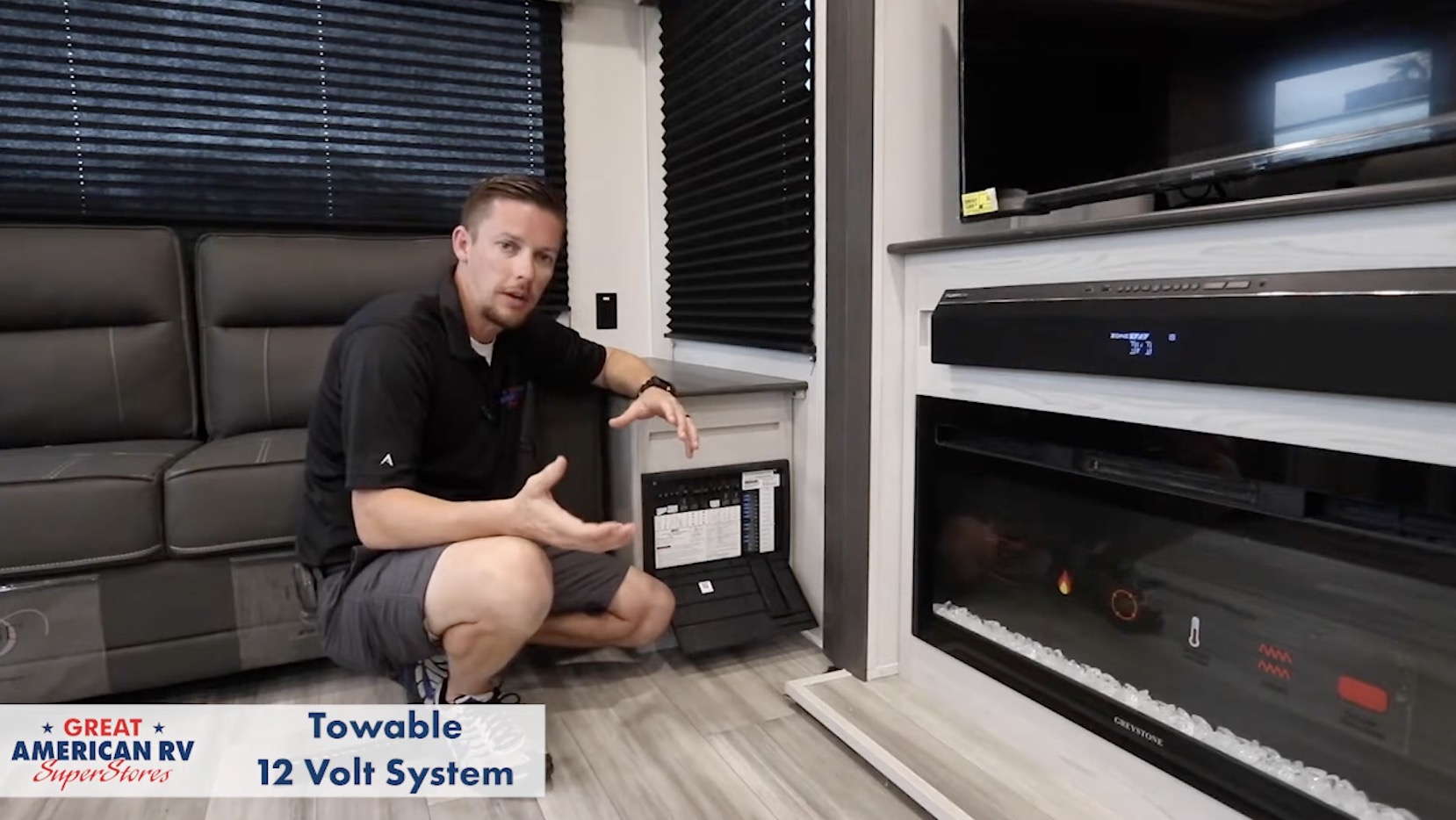
Your towable RV’s 12-volt system is the unsung hero of every camping trip — the quiet powerhouse that keeps lights on, water flowing, slides extending, and appliances thinking clearly. Unlike your tow vehicle’s starting battery, the RV’s house battery (or batteries) runs the entire living space when you’re off-grid or even when plugged in but relying on DC functions. If that 12-volt system weakens, nearly everything grinds to a halt: dim or flickering lights, a water pump that won’t prime, furnace blower that refuses to start, slide-outs that stall halfway, or a refrigerator control board that won’t let the gas mode ignite.
In towable RVs — travel trailers, fifth wheels, toy haulers, and destination trailers — the 12-volt system is especially important because you don’t have an engine alternator constantly recharging while driving (unlike motorized RVs). Everything depends on your house batteries, shore power converter, and occasional tow-vehicle charging line. Neglect it, and a weekend escape becomes a troubleshooting marathon. Master it, and you gain confidence, save on service calls, and extend your off-grid freedom.
At Great American RV SuperStores, we see the same handful of 12-volt issues week after week: dead batteries, blown fuses, tripped breakers, forgotten disconnect switches, and charging problems. This guide explains how the system works, where power flows, how to perform simple checks, common failure points, maintenance routines, upgrade options for 2026, and expanded FAQs drawn from real customer questions.
Hey Happy Campers! Todd here with Great American RV SuperStores.
Today we’re walking through your towable RV’s 12-volt system — why it matters, how it delivers power, battery basics, fuse/breaker locations, charging sources, step-by-step troubleshooting, preventive maintenance, popular upgrades (including lithium), and answers to the questions we hear most often.
If you’d prefer a step-by-step visual demo, check out the full walkthrough on the Great American RV YouTube channel in our Hap’s Helpful Hacks playlist.
Let’s get your 12 volts flowing smoothly!
Why the 12-Volt System Matters More Than Most Owners Realize
The 12-volt DC system powers (or controls) far more than just lights:
- Interior & Exterior Lighting — LED fixtures, porch lights, compartment lights.
- Water Pump — Delivers fresh water from tank to faucets/showers.
- Furnace Blower & Control Board — Even propane furnaces need 12V to ignite and run the fan.
- Refrigerator Control Board — Gas/electric fridges require 12V to switch modes and monitor temps.
- Air Conditioner Control Boards — Many rooftop units need 12V for thermostat communication and startup.
- Slide-Outs & Leveling Systems — Motors and control modules draw heavy amps.
- Electric Awnings, Steps, Jacks — Tongue jacks, stabilizer jacks, power awnings.
- Monitors & Panels — Tank monitors, battery gauges, control centers.
- USB Ports, Fans, Radios — Smaller but constant draws.
When 12 volts drop below ~11.5–12V under load, things get quirky: pumps cavitate, slides creep slowly or stop, control boards lock out, and lights dim. Below 10.5V, many systems shut down to protect themselves. A single weak battery can cascade into multiple “failures” that seem unrelated until you trace them back to voltage. In 2026, with more towables featuring energy-hungry additions like power stabilizers, smart control panels, and electric tongue jacks, the 12-volt demand is higher than ever — making a healthy battery bank non-negotiable.
The Battery Is the Starting Point — Protect It
Everything begins at the house battery bank (usually 1–2 Group 27/31 12V batteries or 2–4 6V golf-cart batteries in series/parallel for 12V and higher capacity).
Common battery types in towables (2026):
- Flooded Lead-Acid (Wet Cell) — Affordable, serviceable (add distilled water). Lifespan 3–5 years with care.
- AGM (Absorbed Glass Mat) — Sealed, no watering, vibration-resistant, better deep-cycle performance. Lifespan 4–8 years.
- Lithium Iron Phosphate (LiFePO4) — Lightweight, 80–100% usable capacity, 2,000–5,000+ cycles, no maintenance. Fast becoming standard in new towables and the #1 upgrade.
Towables rely heavily on shore-power charging (via converter) and occasional tow-vehicle charge line (7-pin pin #4 or #7). Without consistent recharging, batteries sulfate (flooded/AGM) or self-discharge slowly (all types). A common oversight is leaving the battery disconnect switch off during storage — this prevents parasitic drain but also stops trickle charging if plugged in.
Where the Power Goes: Tracing the Flow
- Battery → Main Disconnect Switch — Many towables have a rotary or pull-handle battery disconnect near the battery compartment (front V-nose on travel trailers, front storage on fifth wheels). If left “off,” no 12V reaches the coach — a common “nothing works” culprit.
- Battery → Inline Fuses/Breakers — 30–50A resettable breakers or blade fuses protect high-draw items (tongue jack, slide-outs) and are often mounted on the frame near batteries or propane tanks.
- Main Power Feed → 12V Fuse Panel — Usually inside near the 120V breaker box (kitchen cabinet, wardrobe, or under dinette). Blade fuses (ATO/ATC) with LED indicators show blown fuses instantly.
- From Fuse Panel → Individual Circuits — Each fuse feeds a specific load: lights, pump, furnace, slides, etc.
- Converter Input — When plugged into shore power, the converter supplies 13.5–14.4V to run DC loads directly and charge batteries.
Additional protection points:
- Travel Trailers — Fuses/breakers behind propane tanks or on A-frame near tongue jack.
- Fifth Wheels — Front cargo area near kingpin or side compartments near batteries.
- Resettable Breakers — Protect high-amp circuits (slides, leveling jacks); trip on overload/heat, reset after cooling.
Fuse Types You May See
- Standard Blade Fuses — One-time; replace if blown. LED indicators common.
- Mini Blade / Low-Profile — Smaller circuits.
- Resettable Circuit Breakers — Auto-reset after cooling; used on heavy loads.
- ANL or MIDI Fuses — Near battery for main feed (100–300A).
If a fuse blows repeatedly, stop replacing and diagnose (short, overload, failing component). Always carry spares in various amps (15A, 20A, 30A common).
How the Charging System Works
- Shore Power → Converter — Converts 120V AC to 13.5–14.4V DC. Multi-stage (bulk/absorption/float) in modern units.
- Voltage Check — At batteries with shore power connected: 13.2–14.4V = charging properly. Below 13V = weak converter or bad connection.
- Tow-Vehicle Charge Line — 7-pin connector supplies trickle charge while towing (10–30A depending on truck). Blown truck fuse or bad pin = no charge on the road.
- Solar (Upgrade) — MPPT controller + panels recharge during daylight.
Simple Troubleshooting Steps
- Nothing Works — Check battery disconnect switch (on?), battery voltage (12.6V+ resting), main inline fuses/breakers.
- Specific Item Fails — Locate fuse in panel (use diagram or labels); check for blown LED.
- Dim Lights / Weak Pump — Low voltage — charge batteries, test converter output.
- Slides Won’t Move — Check high-amp breaker near battery or under slide; ensure battery voltage >12V under load.
- Furnace Won’t Light — 12V needed for blower/control board — verify battery charge.
- Water Pump Won’t Run — Fuse, low voltage, or air lock (prime lines).
Always start with voltage measurement — a $10 multimeter reveals most problems.
Preventive Maintenance Tips
- Monthly (or every trip) — Check battery voltage (resting 12.6V+), clean terminals (baking soda/water), tighten connections.
- Flooded Batteries — Charge fully, check water levels (distilled, cover plates 1/4–1/2 inch), every 60–90 days.
- All Types — Keep batteries secure, ventilated; avoid deep discharges (<50% for lead-acid, <20% for lithium).
- Storage — Use battery maintainer/trickle charger; disconnect if storing long-term. Disconnect switch helps prevent parasitic drain from clocks, CO detectors, or memory circuits.
Upgrades for 2026 Towables
- Lithium Batteries — Drop-in replacements (Battle Born, Renogy, SOK); more usable power, lighter weight.
- Battery Monitor — Victron BMV-712 or Shunt for real SOC.
- Solar — 200–600W roof panels + MPPT for daily recharge.
- Converter Upgrade — Progressive Dynamics or WFCO lithium-compatible for full charging.
Expanded Frequently Asked Questions
Why does my RV lose 12V power when plugged in? Converter failure, blown input breaker/fuse, bad shore cord connection, or tripped GFCI.
How do I know if my converter is working? Voltage at batteries should be 13.5–14.4V on shore power.
Fuse keeps blowing — what now? Short circuit or failing component — trace wiring, isolate load, call service.
Can I mix battery types? No — different charge rates damage them.
Best way to charge while towing? Ensure truck’s trailer battery charge fuse is good; consider DC-DC charger upgrade.
Why won’t my tongue jack work? Blown 30–50A breaker/fuse near battery, low voltage, or bad switch.
How long should house batteries last? Flooded: 3–5 years; AGM: 4–8; Lithium: 10+ with proper care.
Is lithium worth it for occasional campers? If you dry camp often — yes. For weekend hookups — AGM may suffice.
Safety when working on batteries? Gloves, eye protection, no sparks, ventilate area.
What if my slides won’t retract on low battery? Charge batteries first; use manual override cranks if available.
My battery gauge always reads low — even after charging? Gauge may be inaccurate; test with multimeter. Old flooded batteries lose capacity over time.
Do I need a battery maintainer for storage? Yes — prevents sulfation and self-discharge. Smart chargers (e.g., Battery Tender, NOCO) work great.
Why does my water pump run but pressure is weak? Low voltage — pump needs 12.5V+ to perform fully. Charge or check connections.
Can solar keep my batteries charged in storage? Yes — 100–200W portable panel + controller maintains float charge year-round.
The Bottom Line
Your towable RV’s 12-volt system is its nervous system — keep batteries healthy, fuses/breakers intact, disconnect switch on when needed, and charging sources strong. Most issues trace to low voltage, blown fuses, tripped breakers, or overlooked switches. Simple checks (voltage, fuses, connections) solve 80% of problems.
By mastering these basics:
- Start troubleshooting at the battery and disconnect.
- Know your fuse/breaker locations.
- Maintain batteries regularly.
- Consider lithium/solar for easier off-grid life.
You’ll spend less time diagnosing and more time enjoying the campsite.
Watch the Full Video Walkthrough See everything demonstrated step-by-step in our Understanding Your Towable RV’s 12-Volt System video from the service team. Find it on the Great American RV SuperStores YouTube channel in the Hap’s Helpful Hacks playlist.
At Great American RV SuperStores, we don’t just sell RVs — we help you understand how to use them. We’re making memories one weekend at a time. 🚐
*This content is not a legal standard or regulation, and does not create any new legal obligation. It is advisory in nature, informational in content, and is intended to assist and educate consumers in the use and enjoyment of their recreational vehicles. Great American RV SuperStores does not hereby make any warranty, express or implied, and does not assume any liability with respect to the use of, or damages resulting from the use of any information, method or process included in this content.
Recent Comments