Understanding the RV Battery Disconnect and Why It Matters
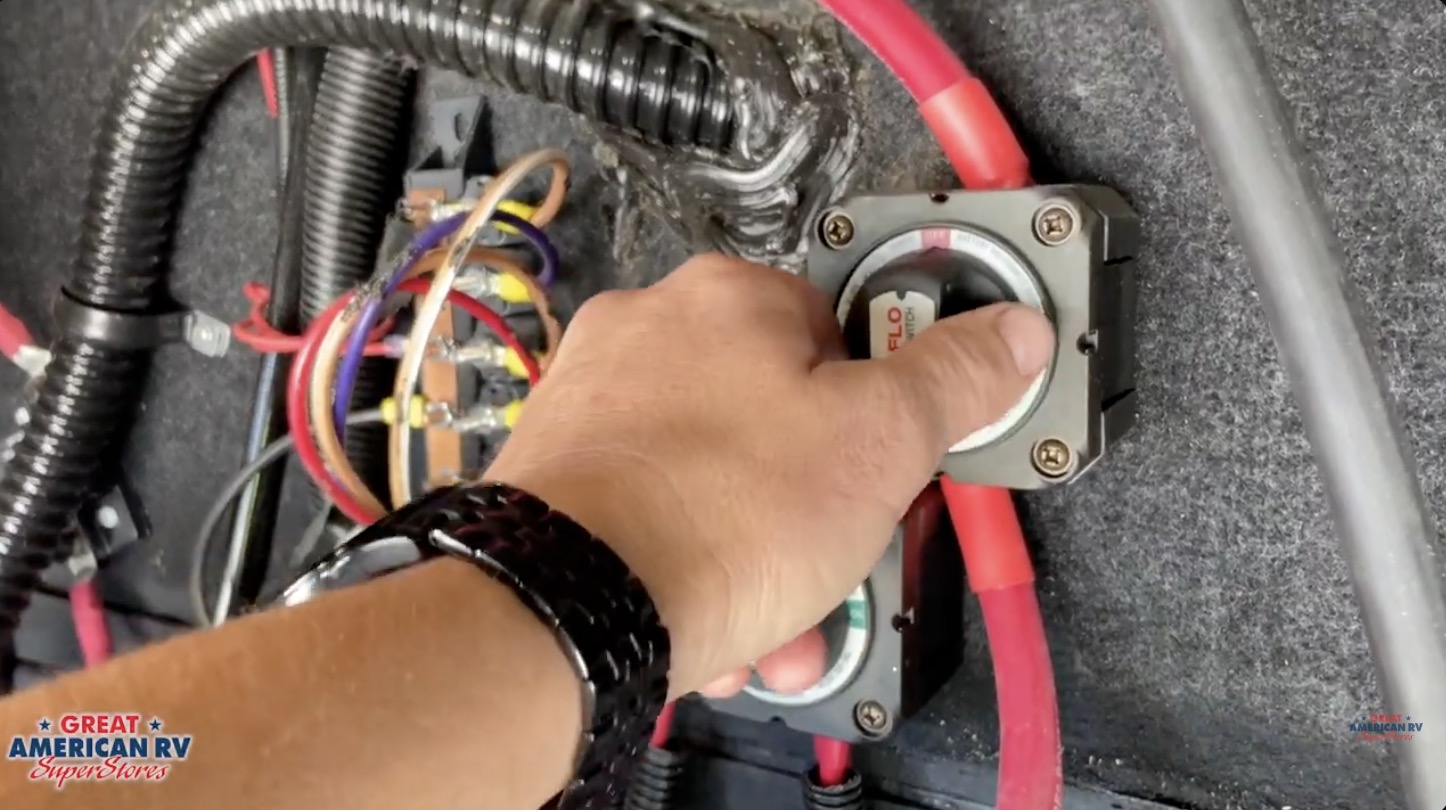
The battery disconnect switch is one of the simplest yet most valuable components in any RV’s electrical system. Whether you own a Class A motorhome, Class B camper van, Class C, travel trailer, fifth wheel, toy hauler, or destination trailer, this small switch can make the difference between returning to a fully charged battery ready for your next trip or finding a dead battery that leaves you stranded at the campsite. Despite its importance, many owners either don’t know it exists, don’t know where it is, misuse it, or misunderstand what it actually does — leading to preventable battery drain, sulfation, shortened battery life, and frustrating no-power situations.
In 2026, battery disconnects remain standard on nearly all new towable and motorized RVs from major manufacturers (Forest River, Keystone, Grand Design, Jayco, Winnebago, Thor, and others). They’re usually rotary knobs, pull-handles, or rocker switches labeled “Battery Disconnect,” “Battery Cut-Off,” or “Power Disconnect.” Some lower-end or older units may lack one from the factory, but adding an aftermarket disconnect is one of the easiest and most cost-effective upgrades you can make.
This comprehensive guide explains everything you need to know about RV battery disconnects: what they do, how they work, where to find them in different RV types, correct usage during camping, storage, and travel, common myths and mistakes, electrical safety considerations, how they interact with converters, solar, inverters, and lithium batteries, step-by-step troubleshooting when things go wrong, installation tips for adding one to an older RV, maintenance best practices, and an expanded FAQ section based on real owner questions and service bay feedback in 2026. Proper use of the battery disconnect extends battery life dramatically, prevents parasitic drain, and gives you peace of mind when the RV is parked for weeks or months.
At Great American RV SuperStores, we explain battery disconnects to new owners every day during PDI and delivery walkthroughs. We see the same issues repeatedly: batteries dead after storage because the disconnect was left on, converters unable to charge because it was turned off while plugged in, or owners confused about why certain systems (like CO detectors) still have power even when the switch is off. Once you understand the purpose and correct usage, this tiny switch becomes one of your RV’s best friends.
Hey Happy Campers! Todd here with Great American RV SuperStores.
Today we’re taking a deep dive into the RV battery disconnect switch — what it really does, why it matters for battery health, where to find it in different RV types, exactly when to turn it on and off (camping, storage, plugged in, towing), common mistakes that kill batteries, how it interacts with converters, solar, inverters, and lithium upgrades, step-by-step troubleshooting, adding one to an older RV, preventive maintenance, safety tips, and answers to the questions we hear most often from owners in 2026.
If you’d prefer a step-by-step visual demo, check out the full walkthrough on the Great American RV YouTube channel in our Hap’s Helpful Hacks playlist.
Let’s keep your batteries alive and your RV ready for every adventure!
Why the Battery Disconnect Matters More Than Most Owners Realize
Every 12-volt system in your RV ultimately draws power from the house batteries: interior and exterior lights, water pump, furnace blower and control board, refrigerator control board (gas/electric models), slide-out motors, awning motors, tank monitors, USB ports, stereo, and more. Those batteries are constantly subjected to small “parasitic” draws even when the RV is parked — things like:
- CO and propane leak detectors (required to stay powered 24/7)
- Clock/memory in control panels
- LP gas detector
- TV antenna booster
- Inverter standby draw (if equipped)
- Solar charge controller (if solar is installed)
- Slide control boards in sleep mode
These tiny draws add up — often 0.1–0.5 amps continuous, which can drain a typical 100Ah battery in 10–20 days. Over months of storage, batteries sulfate (lead-acid/AGM) or lose capacity (lithium), leading to premature failure, expensive replacements, and dead batteries when you’re ready to camp.
The battery disconnect switch solves this problem by physically interrupting the negative (ground) cable between the batteries and the coach’s 12-volt distribution system. When turned off, it isolates the batteries from almost all parasitic loads, dramatically extending battery life during storage or long periods of non-use.
What a Battery Disconnect Actually Does (and Doesn’t Do)
When the disconnect is turned OFF:
- It opens the circuit between the battery negative terminal and the RV’s 12-volt ground bus.
- Most 12-volt loads lose power: lights, pump, furnace blower, slides, jacks, etc.
- The converter cannot charge the batteries (if plugged in) because the circuit is open.
- Certain safety-critical systems often remain powered via direct battery wiring (bypassing the disconnect):
- Carbon monoxide detectors
- Propane leak detectors
- Smoke alarms
- Sometimes radio memory or clock
This is intentional — safety devices must remain active at all times.
When the disconnect is turned ON:
- Full 12-volt power flows to the coach.
- Converter can charge batteries when on shore power or generator.
- All systems operate normally.
Where to Find the Battery Disconnect Switch
Location varies by RV type and manufacturer:
- Travel Trailers — Usually on the front A-frame near the battery box, tongue jack, or propane tanks. Often a red rotary knob or pull-handle.
- Fifth Wheels — Common in the front storage compartment near the kingpin, battery compartment, or pass-through storage.
- Toy Haulers — Near batteries (often in garage area or side compartment).
- Class A Motorhomes — Typically in basement compartment near house batteries or in electrical bay.
- Class C Motorhomes — Often in generator compartment or near coach batteries.
- Class B Camper Vans — Usually near battery compartment (rear or under bench).
Look for:
- Red or black rotary knob (most common)
- Pull-handle style
- Rocker switch labeled “Battery Disconnect”
- Sometimes a key-operated switch for security
If you can’t find it, check your owner’s manual or contact the manufacturer with your VIN — they’ll point you to the exact location.
Correct Usage: When to Turn It On and Off
During Active Camping (Short Trips, Weekends)
- Keep the disconnect ON at all times.
- Allows converter to charge batteries when plugged in.
- Powers all 12-volt systems normally.
- No risk of parasitic drain because you’re using the RV regularly.
During Short-Term Storage (1–4 Weeks, Plugged In)
- Keep disconnect ON.
- Converter maintains battery charge while on shore power.
- Safety detectors remain active.
- Prevents sulfation and self-discharge.
During Long-Term Storage (Months, No Shore Power)
- Turn disconnect OFF.
- Eliminates most parasitic draws.
- Batteries last months instead of weeks.
- Still monitor voltage periodically — even disconnected, batteries self-discharge slowly.
During Long-Term Storage (Months, Plugged In)
- Keep disconnect ON.
- Converter acts as maintainer — keeps batteries at full charge.
- Safety systems stay powered.
While Towing or Driving
- Keep disconnect ON.
- Allows tow vehicle charge line to trickle-charge house batteries (if equipped).
- Powers any 12V systems used while towing (brake controller, lights).
Quick Reference Table
Situation | Disconnect Position | Reason |
Active camping | ON | Full power + charging |
Short storage, plugged in | ON | Converter maintains charge |
Long storage, no power | OFF | Prevents parasitic drain |
Long storage, plugged in | ON | Converter maintains charge |
Towing/driving | ON | Allows charge line to work |
Common Misunderstandings and Mistakes
- Turning it OFF while plugged in — Converter cannot charge batteries → batteries slowly discharge.
- Assuming it cuts ALL power — Safety detectors usually bypass disconnect — normal and intentional.
- Forgetting to turn it back ON — No 12V power when you return — lights, pump, furnace won’t work.
- Using it as a “main kill switch” every night — Unnecessary; modern RVs have very low parasitic draw.
- Not monitoring voltage after turning OFF — Batteries still self-discharge over months.
How the Disconnect Interacts with Other Systems
- Converter — Only charges when disconnect is ON and shore power present.
- Solar — Solar charge controller usually wired before disconnect — charges batteries even when OFF.
- Inverter — Draws from batteries; disconnect OFF prevents inverter use.
- Tow Vehicle Charge Line — Only charges when disconnect ON (most setups).
- Safety Detectors — Often wired directly to battery — stay powered when OFF.
Adding a Battery Disconnect to an Older RV
If your older RV lacks one:
- Aftermarket rotary disconnects: $20–$50 (e.g., Blue Sea Systems, Pollak).
- Install on negative battery cable — cut cable, insert switch.
- Mount in accessible location (battery box or compartment).
- Label clearly.
- Professional install recommended if unsure about wiring.
Benefits: Dramatically extends battery life during storage.
Preventive Maintenance and Best Practices
- Inspect switch monthly — no corrosion, loose wires.
- Clean battery terminals — corrosion kills charging.
- Test voltage before/after switching — confirm operation.
- Use battery maintainer when stored long-term (even with disconnect OFF).
- Keep batteries secure — vibration loosens connections.
- Label switch clearly — “ON” = power to coach, “OFF” = isolated.
Safety Considerations
- Disconnect power before working on batteries or switch.
- No sparks near batteries — explosion risk.
- Turn OFF when working on 12V systems.
- Never bypass for convenience — defeats purpose.
- Keep switch accessible but protected from weather.
Expanded Frequently Asked Questions
Why do CO detectors still work when disconnect is OFF? Safety systems wired directly to battery — intentional for protection.
Does disconnect stop solar charging? Usually no — solar wired before disconnect in most setups.
Should I turn it OFF every night? No — parasitic draw is minimal; unnecessary wear on switch.
How long do batteries last with disconnect OFF? Months instead of weeks — depends on battery type and self-discharge.
Can I add solar without disconnect? Yes — but disconnect still protects during long storage.
Why won’t converter charge when plugged in? Disconnect OFF — turn ON.
Is rotary or pull-handle better? Both work; rotary more common and durable.
Can low voltage damage switch? No — but low voltage prevents charging when ON.
Best battery maintainer for storage? Smart charger (Battery Tender, NOCO Genius) — keeps full charge.
What if switch feels loose or hard to turn? Corrosion or wear — clean/lubricate or replace.
The Bottom Line
The RV battery disconnect is a simple switch that plays a huge role in battery health and electrical reliability. Turn it OFF for long-term storage without power, keep it ON when plugged in or actively camping, and always verify voltage after switching. Used correctly, it prevents dead batteries, extends life, and avoids frustration.
By mastering these basics:
- Know when to turn it ON vs OFF.
- Understand what stays powered.
- Maintain batteries and connections.
- Add one if your RV lacks it.
You’ll protect your batteries and keep your RV ready for every trip.
Watch the Full Video Walkthrough See everything demonstrated step-by-step in our Understanding the RV Battery Disconnect video from the service team. Find it on the Great American RV SuperStores YouTube channel in the Hap’s Helpful Hacks playlist.
At Great American RV SuperStores, we don’t just sell RVs we help you understand how to use them. We’re making memories one weekend at a time. 🚐
*This content is not a legal standard or regulation, and does not create any new legal obligation. It is advisory in nature, informational in content, and is intended to assist and educate consumers in the use and enjoyment of their recreational vehicles. Great American RV SuperStores does not hereby make any warranty, express or implied, and does not assume any liability with respect to the use of, or damages resulting from the use of any information, method or process included in this content.
Recent Comments