How to Manually Override an LCI Hydraulic System
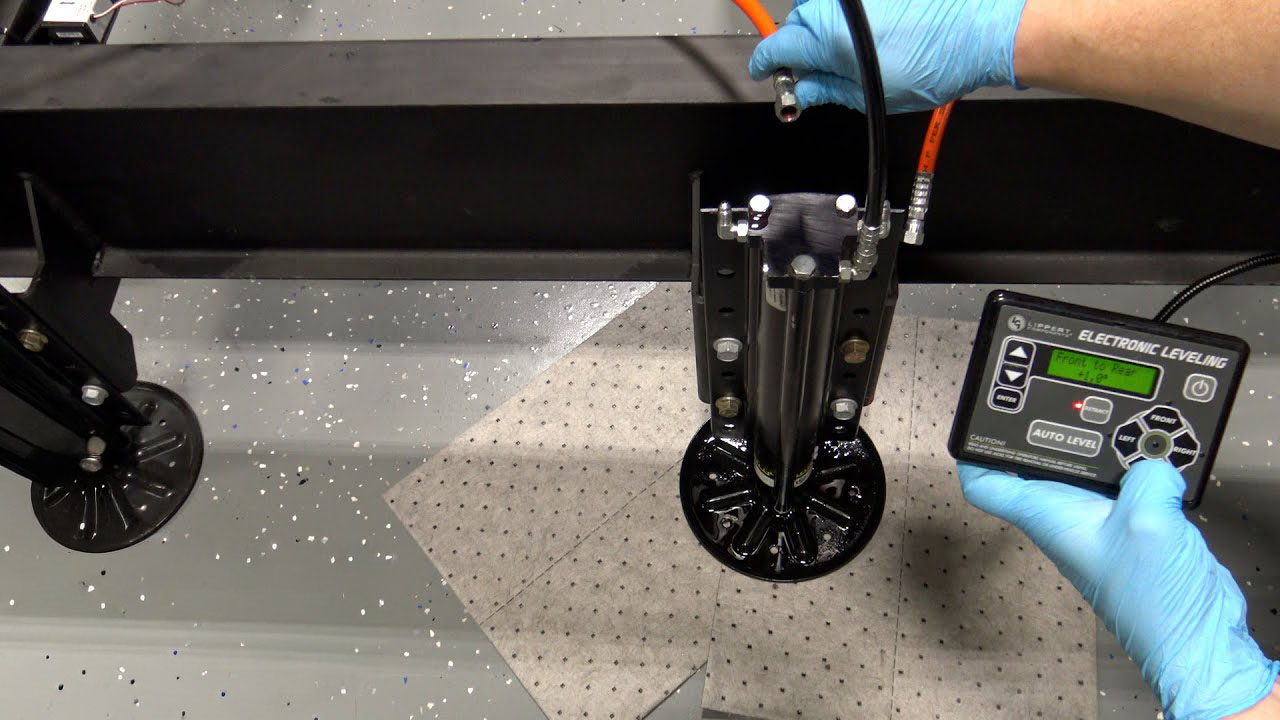
If your RV’s hydraulic system suddenly stops working, don’t panic. Whether it’s your slides or leveling jacks, you can still override the system manually and get your unit back in position.
This guide walks you through how to safely override an LCI hydraulic pump system, including which tools you’ll need and what to watch for during the process.
Hey Happy Campers!
Todd here with Great American RV SuperStores, and today we’re talking about how to manually override an LCI hydraulic system.
This setup controls both your slide-outs and leveling jacks, and while it’s a dependable system, knowing how to operate it manually can save you a major headache on the road.
Understanding the System
Before starting, confirm that your RV uses this style of LCI hydraulic tank and motor setup. It’s been the standard configuration across most units for several years, including many 2024 models.
You’ll see a reservoir at the bottom, a pump above it, and a valve body or manifold behind that with multiple solenoids attached.
You’ll also have another solenoid located near your front right jack. Knowing where these components are will make the process smoother once we start working through the steps.
Tools You’ll Need
You’ll need three tools for this job:
- A ½-inch socket or wrench
- A 5/32-inch Allen wrench or bit (for opening the solenoids)
- A ¼-inch hex bit (to attach to your drill for manual operation)
If space is tight, grab a flex drill attachment — it’ll help you reach solenoids in confined areas without stripping or damaging anything.
Step 1: Check Power First
Before diving into manual override, start with the basics.
- Check your fuses: Look in your front compartment and inspect the blade fuses. Replace any that are blown.
- Check your 12-volt battery: Low voltage is the number one cause of hydraulic issues. Plug into shore power or your truck and allow the battery to charge for a while.
- Listen for clicks: If you hear the pump clicking but not running, it likely needs more charge time.
- Inspect the resettable breaker: Follow the red wire from the three-prong solenoid to the 12-volt breaker and make sure it hasn’t tripped.
If everything checks out and the system still won’t operate, it’s time to override manually.
Step 2: Disconnect power from the Motor
Locate the three-prong solenoid — it’s the one with two black wires running to the motor and one red wire going to the breaker.
Use your ½-inch wrench to loosen and remove the wires from the motor. This disconnects electrical power so you can safely run it manually.
Step 3: Identify Your Solenoid Color Codes
Each solenoid controls a specific function:
- Purple and White: Driver-side middle and rear jacks
- Blue and White: Passenger-side middle and rear jacks
- Gray and White: Front landing gear jacks
- Orange and White: Slide-out hydraulics
Depending on your RV, some solenoids might be mounted directly on the block, while others are attached at individual jack locations.
Step 4: Open the Solenoid
Using your 5/32 Allen wrench, loosen the solenoid slightly by turning it clockwise. Only break it loose until you feel light resistance — it doesn’t need to be torqued down.
Important: If your jacks are extended, make sure nothing is underneath the RV. When the solenoid is opened, weight on the jacks can cause them to drop unexpectedly. Support the frame with jack stands or have your truck hitched and locked before continuing.
Step 5: Operate the Pump Manually
Insert your ¼-inch hex bit into the top of the motor and connect it to your drill.
- Clockwise = Retract
- Counterclockwise = Extend
Run the drill at full speed to move the jacks or slides. It will take some time, especially on slide-outs, since fluid moves slowly through the lines.
As you run the motor:
- You’ll see fluid drop in the reservoir when extending.
- You’ll see fluid rise when retracting.
That’s your visual confirmation that everything’s moving correctly.
Step 6: Close the Solenoid
Once your jacks or slides are fully retracted or extended, go back to the solenoid you loosened earlier.
Tighten it counterclockwise, finger-tight only. Over-tightening can damage the O-rings and cause leaks, so be gentle.
After that, reconnect your motor wires if desired, or leave them off if you anticipate another manual override soon.
Quick Recap
- Verify battery power and check your fuses and breakers.
- Disconnect the motor.
- Open the solenoid using a 5/32 Allen wrench.
- Run the drill counterclockwise to extend or clockwise to retract.
- Close the solenoid finger-tight when finished.
If your setup makes it difficult to reach the motor, use a flexible drill extension to get in through the center hole of the compartment.
Frequently Asked Questions About LCI Hydraulic Manual Override
When should I use manual override on an LCI hydraulic system?
Manual override should be used only when the system will not operate electrically. Common situations include a dead battery, blown fuse, failed control panel, or electrical fault that prevents the pump from running. Manual override is designed as a recovery method, not a normal operating procedure.
If the system works electrically, always use the control panel first.
Is it dangerous to manually override a hydraulic system?
It can be if it’s done incorrectly. Hydraulic systems hold a lot of pressure, and releasing that pressure without preparation can cause jacks or slides to move suddenly.
Before opening any solenoid, always:
- Make sure nothing is under the RV
- Support the frame if jacks are extended
- Hitch to the truck if possible when retracting front landing gear
When done correctly, manual override is safe and controlled.
Why do I have to disconnect power from the motor first?
Disconnecting power prevents the motor from trying to run electrically while you’re operating it manually. Leaving power connected can cause:
- Electrical backfeed
- Damage to the motor
- Unexpected movement
Once the motor wires are removed, the system is fully under your control.
Why do I have to open a solenoid to move a jack or slide?
The solenoids act as hydraulic valves. When they’re closed, fluid is locked in place. Opening the correct solenoid allows fluid to move through the system when the pump runs manually.
If you run the pump without opening a solenoid, nothing will move — the fluid has nowhere to go.
How far should I loosen the solenoid?
Only loosen the solenoid slightly — just enough to break it free. You do not need to remove it or back it out significantly.
Over-loosening can:
- Damage O-rings
- Cause hydraulic leaks
- Make it difficult to reseal properly
Finger-tight is all that’s needed when closing it back up.
Why do the jacks sometimes drop when I open a solenoid?
That’s gravity and hydraulic pressure doing their job. If weight is on a jack and the solenoid is opened, fluid can move freely and allow the jack to retract on its own.
That’s why it’s critical to:
- Keep clear underneath
- Support the RV
- Control the motor immediately after opening the solenoid
Unexpected movement is normal if pressure is released suddenly.
Why does it take so long to move slides or jacks manually?
Hydraulic fluid moves slower without the system’s normal control logic. Slide-outs, in particular, require a large volume of fluid to move, and manual operation doesn’t benefit from automatic pressure management.
This is normal. Be patient and let the drill run at a steady speed.
What if my drill battery dies halfway through?
If the drill stops, the system simply pauses where it is. You can:
- Swap batteries
- Use a corded drill
- Use a hand tool (slower, but it works)
Just make sure the solenoid remains open until movement is complete.
Can I damage the system by running the drill too fast?
Running the drill at full speed is generally fine for these motors, but forcing movement is not. If the motor struggles or movement stops unexpectedly, stop and reassess.
Binding, obstructions, or incorrect solenoid selection can all cause resistance.
Do I need to close the solenoid after I’m done?
Yes. Leaving a solenoid open allows fluid to move unintentionally during travel, which can cause jacks to drift or slides to creep.
Always close the solenoid finger-tight once the movement is complete.
Why does the fluid level change in the reservoir?
This is normal hydraulic behavior:
- Fluid level drops when extending jacks or slides
- Fluid level rises when retracting them
Watching the reservoir is a good way to confirm the system is functioning correctly during manual operation.
Should I reconnect the motor wires afterward?
If power has been restored and you’re done with manual override, reconnect the wires. If you expect to perform additional manual adjustments, it’s okay to leave them disconnected temporarily — just remember to reconnect them before normal operation.
When should I call for service instead of overriding?
Manual override gets you out of a bind, but repeated use means something is wrong. Schedule service if:
- The system repeatedly loses power
- Solenoids leak
- Jacks won’t stay retracted
- The pump struggles even when powered
Hydraulic systems are reliable, but they do require proper diagnosis when faults occur.
Why knowing this matters
Hydraulic failures are stressful when you don’t understand what’s happening. Knowing how to safely override the system gives you control, prevents damage, and helps you make informed decisions about when to continue traveling and when to schedule service.
Final Thoughts
Manual override should always be your last resort, but it’s good to know how to do it correctly. These systems are powerful, and understanding how to relieve hydraulic pressure safely can prevent damage to your RV and keep you out of a bind on the road.
Don’t forget to subscribe to Hap’s Helpful Hacks on the Great American RV YouTube channel for more RV tech tips and system guides.
Here at Great American RV SuperStores, we bring the how-to to you.
*This content is not a legal standard or regulation, and does not create any new legal obligation. It is advisory in nature, informational in content, and is intended to assist and educate consumers in the use and enjoyment of their recreational vehicles. Great American RV SuperStores does not hereby make any warranty, express or implied, and does not assume any liability with respect to the use of, or damages resulting from the use of any information, method or process included in this content.
Recent Comments