How to Operate and Troubleshoot Power Steps on Motorized RVs
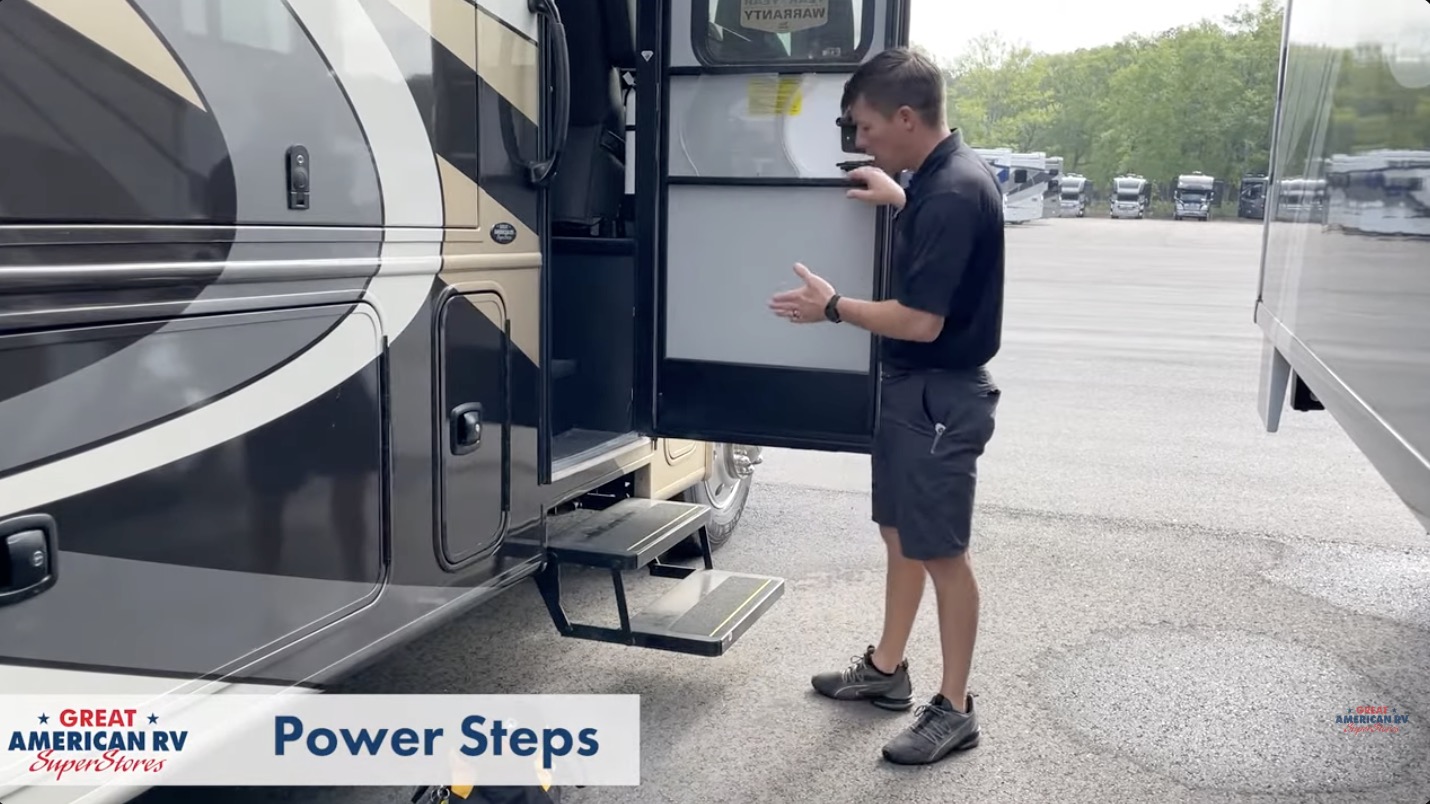
Power steps (also called electric entry steps or retractable steps) are one of those features you use every single trip but rarely think about until they stop working. On motorized RVs — Class A motorhomes, Class C motorhomes, and some Class B camper vans — power steps make entry and exit safer and easier, especially for kids, pets, or anyone with mobility concerns. When they function properly, they extend automatically when the door opens and retract when it closes (or when the ignition starts). When they fail — stuck out, stuck in, intermittent operation, or no movement at all — it can turn a simple campsite arrival into a major hassle or safety issue.
This comprehensive guide covers everything you need to know about power steps on motorized RVs in 2026: how they operate, the control switch and ignition override, magnetic door sensor basics, step-by-step troubleshooting for common failures, electrical checks (fuses, voltage, wiring), manual disable procedures for stuck steps, preventive maintenance routines, lubrication tips, safety considerations, common brands (Lippert, Power Gear, Kwikee, Stromberg Carlson), integration with other systems (slides, leveling), upgrade options, adding steps to older units, and an expanded FAQ section based on real owner questions and service bay feedback. Proper operation, regular maintenance, and quick troubleshooting keep your steps reliable and safe trip after trip.
At Great American RV SuperStores, we service power step issues almost daily. Most problems trace back to simple things: low battery voltage, misaligned door magnets, blown fuses, dirty pivot points, or corrosion from road salt and moisture. Once you understand how the system works and what to check first, you can often fix these yourself in minutes — or know exactly when to call for professional help.
Hey Happy Campers! Todd here with Great American RV SuperStores.
Today we’re going in-depth on how to operate, maintain, and troubleshoot power steps on motorized RVs — from understanding the control switch and ignition override to checking fuses and voltage, realigning the magnetic door sensor, manually disabling stuck steps for travel, lubricating pivot points, preventing corrosion, integrating with leveling/slide systems, upgrading older steps, and answering the questions we hear most often from owners in 2026.
If you’d prefer a step-by-step visual demo, check out the full walkthrough on the Great American RV YouTube channel in our Hap’s Helpful Hacks playlist.
Let’s get your steps extending and retracting smoothly every time!
How Power Steps Normally Operate
Power steps on motorized RVs are electric, 12-volt DC systems that use a motor and gearbox to extend and retract the step assembly. The basic operation relies on three key inputs:
- Door Switch/Magnetic Sensor — A magnetic switch (reed switch) mounted on the door frame and a magnet on the door itself. When the door opens (magnet moves away), the circuit opens and signals the step motor to extend. When the door closes (magnet aligns), the circuit closes and signals retraction.
- Control Switch (Interior) — Usually a rocker or toggle switch near the entry door labeled “Steps” or “Step Override.”
- Off — Steps stay extended (common when parked and using door frequently).
- On/Auto — Steps retract automatically when door closes (used while traveling).
- Ignition Override — Many motorized RVs have an ignition safety interlock. When the engine starts, steps retract automatically — even if the control switch is off — to prevent damage while driving.
Additional safety features on modern systems (Lippert, Power Gear, Kwikee 2025–2026 models):
- Obstruction detection — some reverse if something blocks extension.
- Timeout protection — motor shuts off after a set time to prevent burnout.
- Low-voltage cutoff — prevents operation below ~10.5V to protect motor.
First Things to Check If Steps Don’t Move
Most power step failures are electrical — start simple before assuming mechanical damage:
- Battery Disconnect Switch — Must be ON. Power steps run on 12V — no power, no movement.
- Control Switch — Ensure it’s in the correct position (ON/Auto for retraction).
- Ignition Override — Turn ignition ON briefly — steps should retract automatically on many units.
- 12-Volt Fuse Panel — Locate interior fuse panel (near breaker panel). Check “Steps,” “Power Steps,” or “Entry Steps” fuse (usually 15–30A). Blown fuse = no power to motor.
- Magnetic Door Sensor — Open/close door slowly. Listen for click or watch for alignment (magnet and sensor should be within 1/4–1/2 inch when closed). Misaligned, loose, or missing magnet = no signal.
- Battery Voltage — Measure at batteries: 12.6V+ resting, 12V+ under load. Low voltage (<11.5V) causes weak or no movement.
Understanding Step Wiring Basics
Power step systems use a few key wires:
- Constant 12V power — From battery to motor (protected by fuse).
- Ignition wire — Becomes hot when engine starts; signals retraction.
- Door sensor wire — Completes ground when magnets align.
- Control switch wire — Allows interior switch to override.
- Ground wire — Solid ground connection critical.
If any signal is missing, steps may extend but not retract, retract but not extend, or not move at all.
What to Do If Steps Are Stuck Out (Emergency Disable for Travel)
If motor fails or power is lost and steps won’t retract:
- Safer Option: Remove Motor (preferred over fighting spring-loaded pins)
- Support steps (helper or jack stand).
- Locate motor (under step assembly, usually 3 bolts).
- Disconnect wiring harness.
- Remove bolts; lower motor carefully (gear and dowel pin must stay with motor).
- Manually fold steps up.
- Secure with ratchet strap or bungee to prevent movement while driving.
- Alternative: Pivot Pin Removal — Some models allow pulling a pin, but heavy spring tension makes it risky without tools.
Once disabled, drive to service center — repair motor, sensor, or wiring.
Basic Maintenance for Power Steps
Power steps live under the RV — exposed to dirt, water, salt, and road grime — so regular care extends life:
- Clean Pivot Points — Monthly: Remove dirt/debris with brush or compressed air.
- Lubricate — Apply RV-safe silicone spray (not WD-40 or grease — attracts dirt) to all pivot points, hinges, and linkage yearly.
- Rust Prevention — Touch up chipped paint with black spray paint; use rust converter on rust spots.
- Check Step Tread — If peeling or torn, trim loose edges to prevent catching.
- Inspect Wiring — Look for chafing, corrosion, or loose connections annually.
- Test Operation — Extend/retract monthly — even in storage — to keep motor free.
Common Brands and Differences (2026 Models)
- Lippert (Ground Control / OneControl) — Touchscreen integration, Bluetooth, often with auto-retract on ignition.
- Power Gear — Reliable, common on older units; manual override crank available.
- Kwikee (Lippert-owned) — Classic step design; many aftermarket upgrades.
- Stromberg Carlson — Manual or electric options; popular for retrofits.
Most share similar wiring and sensor setups — troubleshooting steps apply broadly.
Electrical and Sensor Troubleshooting
No movement:
- Voltage <11.5V — Charge batteries.
- Blown fuse — Check 12V panel and inline fuse near motor.
- Bad door sensor — Test continuity (closed door = continuity).
- Faulty control switch — Bypass temporarily to test.
- Motor seized — Listen for hum/click; manual crank if available.
Intermittent operation:
- Loose/corroded grounds — Clean all connections.
- Chafed wiring — Inspect harness under RV.
Safety Tips and Best Practices
- Never stand under extended steps — heavy load risk.
- Support steps when removing motor — spring tension hazard.
- Disconnect battery before wiring work.
- Test steps monthly — prevent seized motors.
- Retract fully before driving — damage risk if extended.
- Keep sensor/magnet clean and aligned.
Adding or Upgrading Power Steps
Older RVs without steps:
- Aftermarket kits (Kwikee, Stromberg Carlson) — $300–$800.
- Requires 12V power, door sensor, control switch.
- Professional install recommended for wiring/safety.
Upgrading manual to electric:
- Bolt-on kits available — integrate with existing door.
Expanded Frequently Asked Questions
Why do steps retract when I start the engine? Ignition override safety feature — prevents damage while driving.
Steps extend but won’t retract? Door sensor misaligned, control switch off, low voltage.
Can I disable steps permanently? Yes — remove motor or disconnect wiring (service recommended).
How often lubricate steps? Monthly in use; annually in storage.
Steps make grinding noise? Dirty pivots or seized motor — clean/lube or service.
Fuse keeps blowing? Short in motor or wiring — trace and repair.
Can I add exterior switch? Yes — aftermarket kits for convenience.
Why steps won’t extend on low battery? Voltage <11.5V — charge batteries.
Best lube for steps? Silicone spray — no grease (attracts dirt).
Steps stuck out — safe to drive short distance? No — secure with strap; risk damage or loss.
The Bottom Line
Power steps on motorized RVs are simple 12V systems: door sensor triggers extension/retraction, control switch and ignition override add safety, and regular lubrication prevents seizing. Check voltage, fuses, and sensor alignment first for most issues; manually disable motor if stuck for travel. Maintain them routinely, and they’ll serve reliably for years.
By mastering these basics:
- Check power and sensor first.
- Lubricate pivots regularly.
- Use ignition override safely.
- Know manual disable procedure.
You’ll avoid trip-ending failures and keep entry safe and easy.
Watch the Full Video Walkthrough See everything demonstrated step-by-step in our How to Operate and Troubleshoot Power Steps on Motorized RVs video from the service team. Find it on the Great American RV SuperStores YouTube channel in the Hap’s Helpful Hacks playlist.
At Great American RV SuperStores, we don’t just sell RVs we help you understand how to use them. We’re making memories one weekend at a time. 🚐
*This content is not a legal standard or regulation, and does not create any new legal obligation. It is advisory in nature, informational in content, and is intended to assist and educate consumers in the use and enjoyment of their recreational vehicles. Great American RV SuperStores does not hereby make any warranty, express or implied, and does not assume any liability with respect to the use of, or damages resulting from the use of any information, method or process included in this content.
Recent Comments