RV Maintenance Basics Every New Owner Needs to Know
RV ownership is exciting. The trips, the freedom, the memories you’re planning to make.
What most new owners don’t realize is that RV ownership also comes with responsibility. Not in a scary way, but in a very real, practical way. An RV isn’t a car, and it isn’t a house. It’s a combination of both, and it needs attention even when it’s not being used.
The good news is this: basic RV maintenance isn’t complicated. It just needs to be understood early.
Most major RV problems don’t happen overnight. They happen slowly, quietly, and usually because something small was ignored for too long. This guide covers the core maintenance basics every new RV owner should know so you can enjoy your RV instead of constantly reacting to it.
RV Maintenance Starts the Day You Buy It
One of the biggest misconceptions new owners have is that maintenance starts after the warranty ends.
It doesn’t.
Maintenance starts the day you take ownership.
Your RV will age whether you use it or not. Sitting still is often harder on an RV than traveling. Seals dry out, batteries degrade, tires age, and appliances suffer from lack of use.
New owners sometimes assume that because their RV is under warranty, maintenance isn’t urgent. In reality, warranty coverage does not replace routine care. In many cases, neglecting basic maintenance can actually affect warranty coverage later.
Another reason maintenance needs to start immediately is because RVs don’t get “broken in” the way cars do. The first year of ownership is often when owners discover how their specific RV responds to use, weather, storage, and travel. Small adjustments, tightening fasteners, resealing areas, and learning system behaviors are all part of that process.
This is also when owners build habits. Owners who walk their RV regularly, check seals, open compartments, and look for changes tend to catch issues early. Owners who only look at their RV when something stops working usually discover problems after damage has already occurred.
Maintenance isn’t about constant work. It’s about familiarity. Knowing what “normal” looks like for your RV makes it easier to spot what isn’t normal before it becomes a problem.
Water Is the Biggest Threat to Your RV
If there’s one thing every RV owner needs to take seriously, it’s water intrusion.
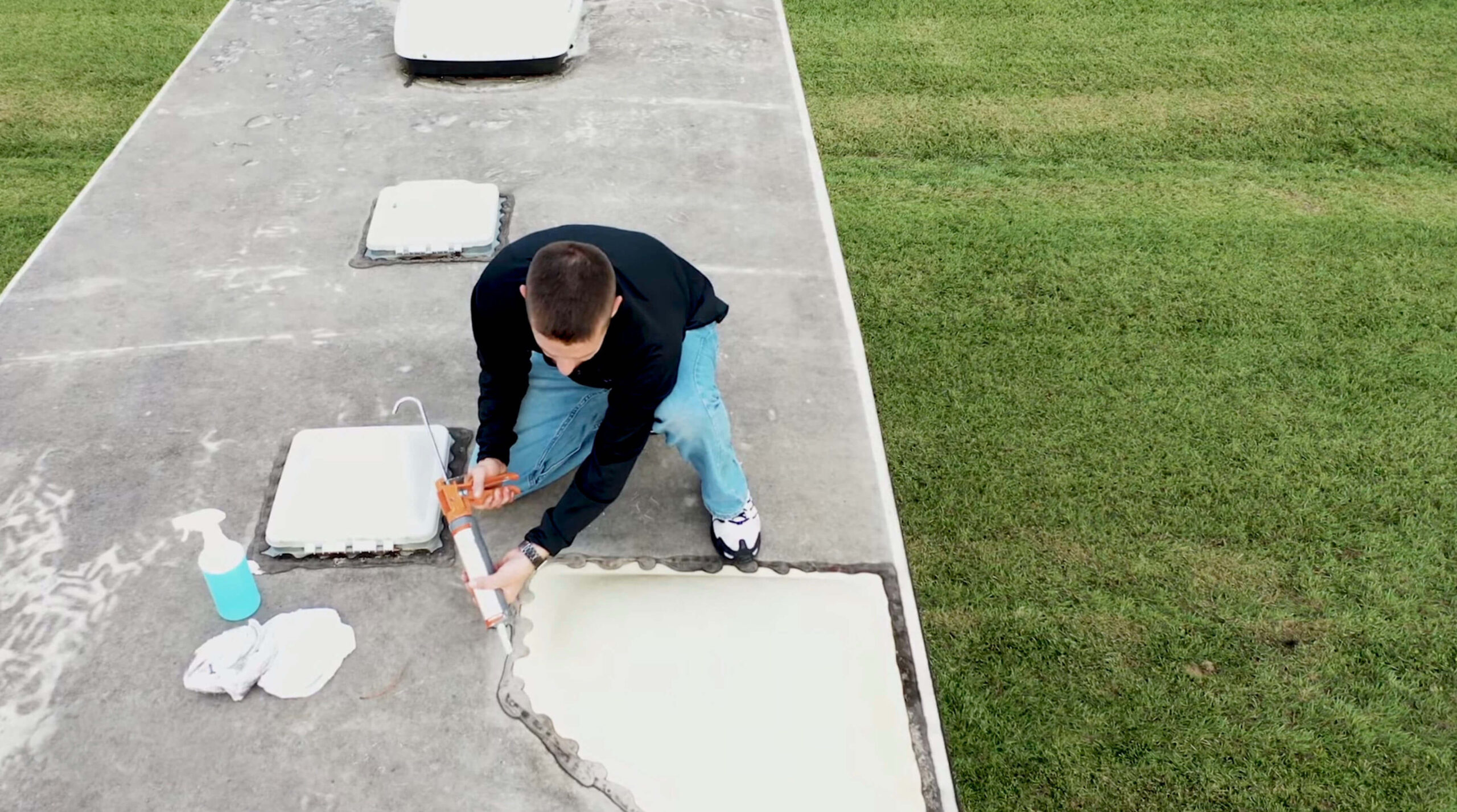
Water damage is the most expensive and most preventable issue in RV ownership. Roof seams, slide seals, windows, doors, vents, antennas, and exterior penetrations are all potential entry points.
You don’t need to be a technician to inspect these areas. A visual inspection a few times a year goes a long way. Look for cracked sealant, gaps, bubbling, or areas where sealant has pulled away from the surface.
Water damage rarely announces itself immediately. By the time stains appear inside, damage has often been happening for months behind walls or under flooring.
Catching small seal issues early can save thousands of dollars, extended downtime, and in some cases prevent structural damage that’s far more difficult to repair.
Tires Age Before They Wear Out
RV tires are one of the most misunderstood maintenance items for new owners.
Most RV tires are replaced because of age, not tread wear. Even if they look good and have plenty of tread, rubber degrades over time due to heat, sun exposure, and sitting still.
In most cases, RV tires should be replaced around five years regardless of appearance.
A tire blowout isn’t just inconvenient. It can cause damage to wheel wells, wiring, plumbing, body panels, insulation, and even slide mechanisms. What could have been a planned tire replacement can quickly turn into a costly repair and a ruined trip.
Replacing tires on schedule is one of the simplest and most effective ways to prevent major problems on the road.
Appliances Need to Be Used to Stay Healthy
A common assumption is that if you’re not using your RV, everything inside is fine.
In reality, RV appliances often fail faster when they sit unused.
Water heaters, furnaces, air conditioners, refrigerators, generators, slide systems, and leveling systems all benefit from regular operation. Using them periodically keeps seals lubricated, components moving, and problems visible while they’re still manageable.
Running systems while you’re close to home gives you the chance to learn how they behave without the pressure of being on a trip. You learn normal sounds, startup times, and performance. When something changes, you recognize it sooner.
Many issues that feel like sudden failures on the road actually started weeks or months earlier with subtle symptoms that went unnoticed. Regular operation turns those surprises into manageable maintenance items instead of trip-disrupting problems.
Confidence comes from familiarity. Familiarity comes from use.
Batteries and Electrical Systems Matter More Than You Think
Your RV relies on both 12-volt and 120-volt electrical systems, and problems in either can create confusing symptoms.
Low battery voltage is one of the most common causes of false error codes, inverter shutdowns, appliances not working properly, and control panels acting erratically.
Batteries should be checked regularly for charge level, condition, and corrosion. Even a relatively new battery can fail if it’s not maintained properly.
Many service appointments begin with electrical complaints that turn out to be battery-related. Proper battery care prevents unnecessary service visits and frustration.
Slides, Jacks, and Moving Parts Need Attention
Anything on your RV that moves needs care.
Slide-outs, leveling systems, stabilizers, steps, hitch components, suspension parts, and landing gear should be inspected regularly. Dirt, debris, and lack of lubrication can cause binding, uneven operation, or premature wear.
Follow manufacturer recommendations for lubrication and cleaning. Over-lubricating or using the wrong products can be just as harmful as ignoring these systems altogether.
A few minutes of routine attention can prevent costly repairs and avoid being stuck with a system that won’t operate when you need it most.
Fluids, Filters, and Seasonal Considerations
Some maintenance items change with the seasons.
Depending on how and where you use your RV, you may need to winterize plumbing systems, de-winterize properly in spring, change water filters regularly, and inspect furnace and air-conditioning components seasonally.
Skipping seasonal maintenance can lead to frozen pipes, clogged filters, poor appliance performance, and avoidable damage.
Even if you don’t plan to camp year-round, your RV still needs seasonal care.
Maintenance Is Not the Same as Repair
This distinction matters.
Maintenance is routine and planned. Repairs are reactive and unplanned.
Maintenance includes inspections, cleaning, resealing, lubrication, and scheduled replacements. Repairs happen when something breaks, fails, or is damaged.
Owners who stay ahead of maintenance experience fewer repairs, less downtime, and lower long-term costs. Owners who ignore maintenance often feel like their RV is always in the shop.
The difference isn’t luck. It’s preparation.
What Maintenance Is Not Covered by Warranty
This is where many new owners are caught off guard.
Most warranties do not cover routine maintenance, seal inspections or resealing, tire replacement due to age, battery replacement, or wear items.
Warranties cover defects in materials and workmanship, not normal aging or lack of maintenance.
Understanding this upfront prevents frustration and helps owners budget realistically for long-term ownership.
Not all maintenance needs to be handled by a service department, but not everything should be done without professional help either. Knowing where that line is comes with time and experience.
Basic inspections, cleaning, lubrication, and visual checks are well within the ability of most owners. More complex repairs involving electrical systems, gas appliances, structural components, or slide mechanisms are often best left to trained technicians.
The goal isn’t to do everything yourself. The goal is to understand enough to recognize when professional service is needed before small issues turn into major repairs.
Use It, Inspect It, Maintain It
One of the simplest maintenance strategies is also the most effective.
Use your RV.
Inspect it regularly.
Address small issues early.
You don’t need to know everything. You don’t need to fix everything yourself. You just need to pay attention and ask questions when something doesn’t seem right.
One thing experienced owners eventually learn is that maintenance isn’t about eliminating problems entirely. It’s about controlling when and how problems happen.
Proactive maintenance shifts issues into your timeline instead of letting them interrupt trips. A planned reseal, a scheduled tire replacement, or a battery change at home is always easier than dealing with those same issues in a campground, on the side of the road, or during a holiday weekend.
Owners who accept that reality tend to enjoy their RVs more. They spend less time frustrated and more time prepared.
It’s also worth remembering that no RV owner gets everything right at the start. Maintenance knowledge builds over time through experience, small mistakes, and learning what matters most for your specific RV and camping style. The goal isn’t mastery, it’s progress. Each inspection, repair, or adjustment makes the next one easier and less intimidating, turning ownership into something manageable instead of overwhelming.
Final Word
RV maintenance isn’t about perfection. It’s about awareness.
If you understand the basics, take care of small issues early, and accept that maintenance is part of ownership, your RV experience will be far more enjoyable and far less stressful.
The goal isn’t to avoid every problem.
The goal is to avoid the preventable ones.
And most of them are.
At Great American RV SuperStores, we believe in helping you start your RV journey the right way, with education, trust, and transparency. Because owning an RV isn’t about buying a vehicle. It’s about investing in a lifestyle that brings people together.
If you’re ready to explore what RV ownership could look like for you, our team is here to help every step of the way.
Recent Comments