RV Service Expectations: What to Know Before You Drop Off Your Camper
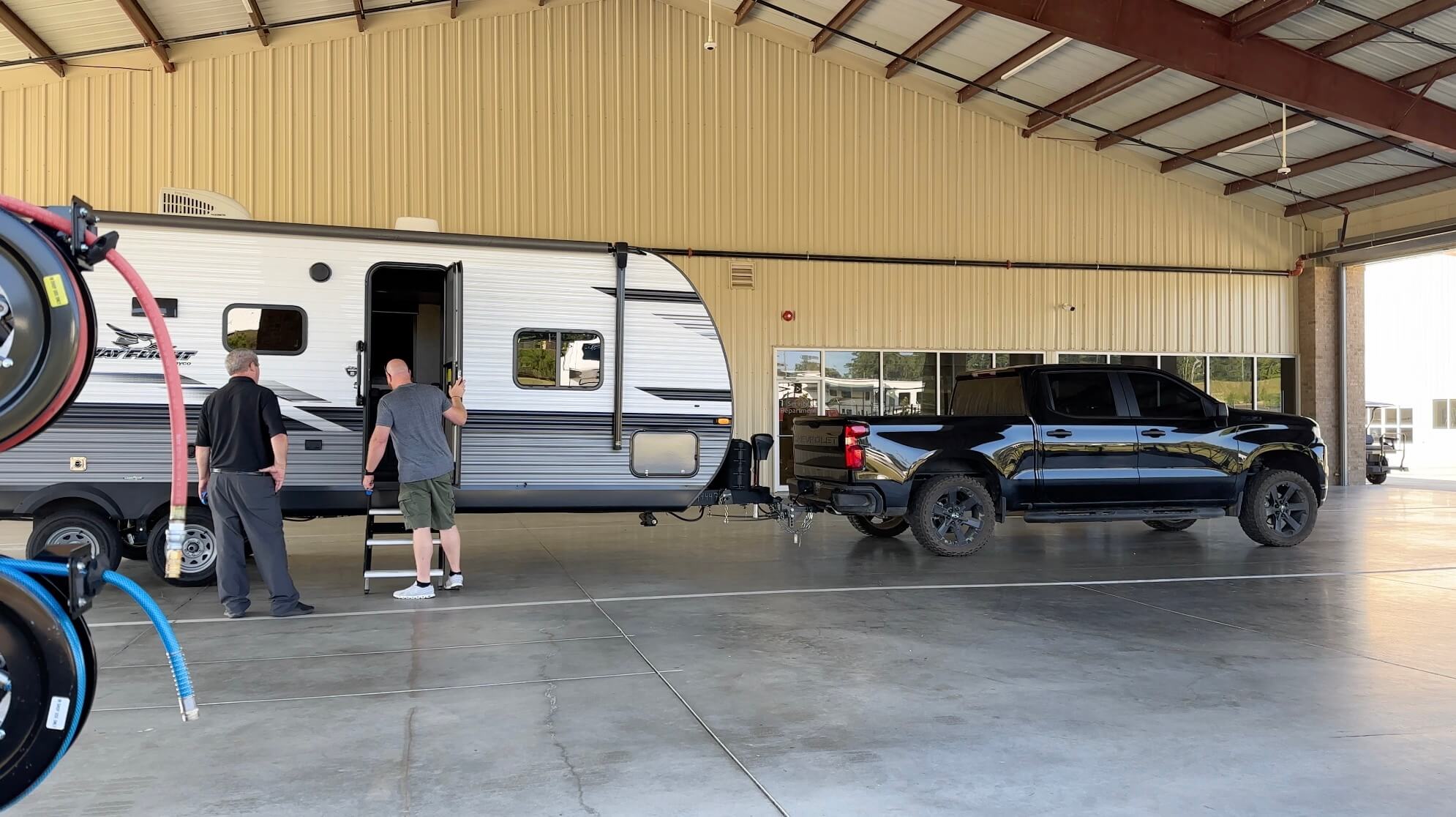
RV service isn’t complicated, but it is different than automotive service. Understanding how the process works before you drop off your camper helps set realistic expectations, improves communication, and ultimately leads to a smoother experience for everyone involved.
Whether you’re coming in for warranty work, an extended service contract claim, insurance repairs, or customer-pay maintenance, knowing what happens behind the scenes allows you to plan better and keep your camping season on track.
At Great American RV SuperStores, we believe clear expectations create better outcomes.
Hey Happy Campers!
Todd here with Great American RV SuperStores.
Today we’re walking through RV service expectations from start to finish — how appointments are scheduled, what happens during diagnosis, how warranty and extended warranty claims work, why service timelines vary, and what you can do as an owner to help the process move as efficiently as possible.
Step 1: Scheduling Your Service Appointment
Your RV service experience begins with our Service Writers. One of the benefits of our process is consistency — you’ll typically work with the same Service Writer each time, allowing you to build a relationship with someone who understands your RV, your history, and your priorities.
Your Service Writer is your main point of contact for:
- Scheduling appointments
- Communicating repair status
- Submitting warranty or insurance claims
- Coordinating parts and approvals
Planning ahead is important. Spring, summer, and fall are the busiest seasons, and appointments can book out three to four weeks in advance. Winter months are generally less busy and may offer faster shop access, though manufacturer shutdowns and inventory counts can occasionally slow parts availability during that time.
Step 2: Check-In and Initial Inspection
At check-in, your Service Writer will review your list of concerns and document them in detail. Specific areas may be marked with tape so technicians can quickly identify problem locations.
If you’ve been keeping a notepad or phone list of issues as they come up, bring it with you. That information helps ensure nothing gets overlooked. It’s very common — especially with newer RVs — to have a handful of small warranty items after a few trips. That’s normal.
The more detail you can provide, the better. Let us know:
- When the issue occurs
- Whether it’s constant or intermittent
- What you hear, see, or smell when it happens
Photos or videos captured when the problem occurs are extremely helpful, particularly for intermittent issues that may not show up during inspection.
Step 3: Diagnosis and Warranty Submission
Once your RV moves into the shop, a Certified Technician begins diagnosis.
For each concern, the technician will:
- Inspect and test the affected system
- Document findings with photos or video
- Write a detailed repair report
- Submit the claim to the manufacturer or warranty provider
For factory warranty repairs, approval must be received before any work begins or parts are ordered. This protects you by ensuring the repair is covered, but it does add time.
For extended warranty claims, the process is similar, but many providers require a third-party inspector to physically verify the issue. That inspection is coordinated through the Service Writer and depends on inspector availability, not just dealership scheduling.
Step 4: Parts Ordering and Processing Time
While approvals are in progress, our Parts Department works to identify and source the correct components. This step can take time because RVs vary widely by model, floorplan, and production run.
Some manufacturers require parts to be ordered directly from them, while others allow sourcing through approved distributors. Structural and cosmetic items — such as wall panels, trim, or doors — almost always must come from the manufacturer. Appliances and mechanical components may be sourced locally in some cases.
Extended warranty and insurance repairs often require part numbers and pricing to be submitted for final approval, which can add additional processing time.
If a repair is non-critical, you’re welcome to pick up your RV and continue using it while waiting on parts or authorization. Once everything arrives, we’ll schedule a return visit. Critical repairs are those that make the RV unsafe or unusable.
Step 5: Repairs, Quality Control, and Pickup
Once approvals are complete and parts arrive, your RV returns to the shop for repairs.
After the technician finishes, the unit goes through Quality Control (QC). This step ensures:
- Repairs were completed correctly
- Systems operate as intended
- All documented concerns were addressed
When notified that your RV is ready, plan time for a walkthrough with your Service Writer. This gives you the opportunity to review the completed work and operate the system as you did when the issue originally occurred.
Same-Day Service Availability
Great American RV SuperStores offers Same-Day Service for select repairs.
Some concerns can be diagnosed and repaired in a single visit depending on parts availability and workload. Ask your Service Writer if your issue qualifies. In some cases, same-day service focuses on urgent concerns, with additional items scheduled for a later appointment.
Why RV Service Takes Time (Even When Everything Is Going Right)
RV service involves more moving parts than most people realize. A single RV may include components from multiple manufacturers, each with its own approval process, documentation requirements, and parts availability.
Warranty repairs require diagnosis, documentation, and approval before work begins. Extended warranties may add inspection steps. Parts availability varies widely, especially for structural components.
Delays don’t mean your RV is being ignored. They mean the process is moving through the steps required to fix it correctly and protect your coverage.
How You Can Help Speed Up the Service Process
There are several ways owners can help reduce delays:
- Be specific when describing issues
- Bring warranty or insurance documentation
- Respond promptly to calls or emails
- Understand which repairs are critical vs. cosmetic
- Schedule service during slower seasons when possible
Clear communication and realistic expectations go a long way.
Setting the Right Expectations Leads to Better Outcomes
RV service works best as a partnership. When owners understand the process and technicians have clear information, repairs are completed more efficiently and accurately.
Our goal is never to rush repairs. It’s to fix things correctly the first time and return your RV ready for the road.
What RV Service Is (And What It Isn’t)
One of the biggest challenges in RV service is that many customers naturally compare it to automotive repair. While there are similarities, RV service operates very differently, and understanding that difference can help prevent frustration.
An RV is not a single-manufacturer product. It’s a rolling structure made up of dozens of independent systems — appliances, plumbing, electrical, HVAC, slide mechanisms, leveling systems, and structural components — often sourced from multiple manufacturers. Each of those manufacturers controls its own warranty rules, approval timelines, and parts availability.
That means RV service is rarely a “diagnose it today, fix it tomorrow” process, especially for warranty work. Even when the issue is obvious, documentation and authorization are still required before repairs can begin. Skipping those steps can void coverage and ultimately cost the customer more.
RV technicians also don’t work assembly-line style. Each RV is different, even within the same model year. Floorplans, component placement, and routing can vary, which means diagnosis often takes longer than expected.
None of this means service is slow or inefficient — it means it’s thorough. Taking the time to diagnose correctly, submit proper documentation, and install the correct parts is what prevents repeat visits and unresolved issues later.
Common RV Service Questions We Hear Every Day
“Why can’t you just fix it and bill the warranty later?”
Manufacturers and extended warranty providers require approval before repairs are performed. Doing the work first risks denial, which would shift the cost to the customer. Waiting protects your coverage.
“Why does my RV just sit while waiting on approval?”
During approval stages, your RV may not physically move, but that doesn’t mean nothing is happening. Claims, photos, estimates, and communications are all being processed behind the scenes.
“Why can’t you give me an exact completion date?”
Because service timelines depend on factors outside the dealership’s control — manufacturer response time, inspector scheduling, and parts availability. Giving a hard date before those steps are complete would be misleading.
“Why do cosmetic issues take longer?”
Cosmetic and structural parts almost always come directly from the manufacturer. These parts are often built to order and can’t be sourced locally, which adds lead time.
“Why does it seem faster in the off-season?”
Shop availability improves in winter months, but parts availability and manufacturer staffing can decrease. Sometimes it’s faster overall, sometimes it balances out.
Why Communication Matters So Much
RV service works best when communication goes both ways. Service Writers manage dozens of units at once, coordinating technicians, parts departments, manufacturers, and warranty companies.
When customers provide detailed descriptions, respond quickly to questions, and understand the process, repairs move more smoothly. When communication breaks down, delays often follow.
That’s why we encourage customers to stay engaged, ask questions, and treat service as a collaboration rather than a transaction.
A Final Perspective on RV Service
Owning an RV means owning a complex machine that’s designed to move, flex, and live outdoors. Things will need attention over time — that’s part of the lifestyle, not a failure of the product.
Service isn’t about perfection. It’s about keeping your RV safe, functional, and ready to create memories. Setting realistic expectations makes that process smoother, less stressful, and far more predictable.
Service work doesn’t have to be stressful. Knowing how the process works allows you to plan ahead, communicate effectively, and keep enjoying your RV.
At Great American RV SuperStores, we take pride in doing things right, keeping you informed, and helping you make the most of every camping season.
Stay Connected
Want to learn more about how your RV systems work or how to handle basic maintenance yourself?
Check out the Great American RV YouTube channel and visit the Hap’s Helpful Hacks playlist for in-depth how-to videos and product guides.
Like, share, and follow for more RV tips and service advice.
Here at Great American RV SuperStores, we’re making memories one weekend at a time.
*This content is not a legal standard or regulation, and does not create any new legal obligation. It is advisory in nature, informational in content, and is intended to assist and educate consumers in the use and enjoyment of their recreational vehicles. Great American RV SuperStores does not hereby make any warranty, express or implied, and does not assume any liability with respect to the use of, or damages resulting from the use of any information, method or process included in this content.
Recent Comments