Understanding RV Inverters: What They Are, How They Work, and How to Use Them Effectively
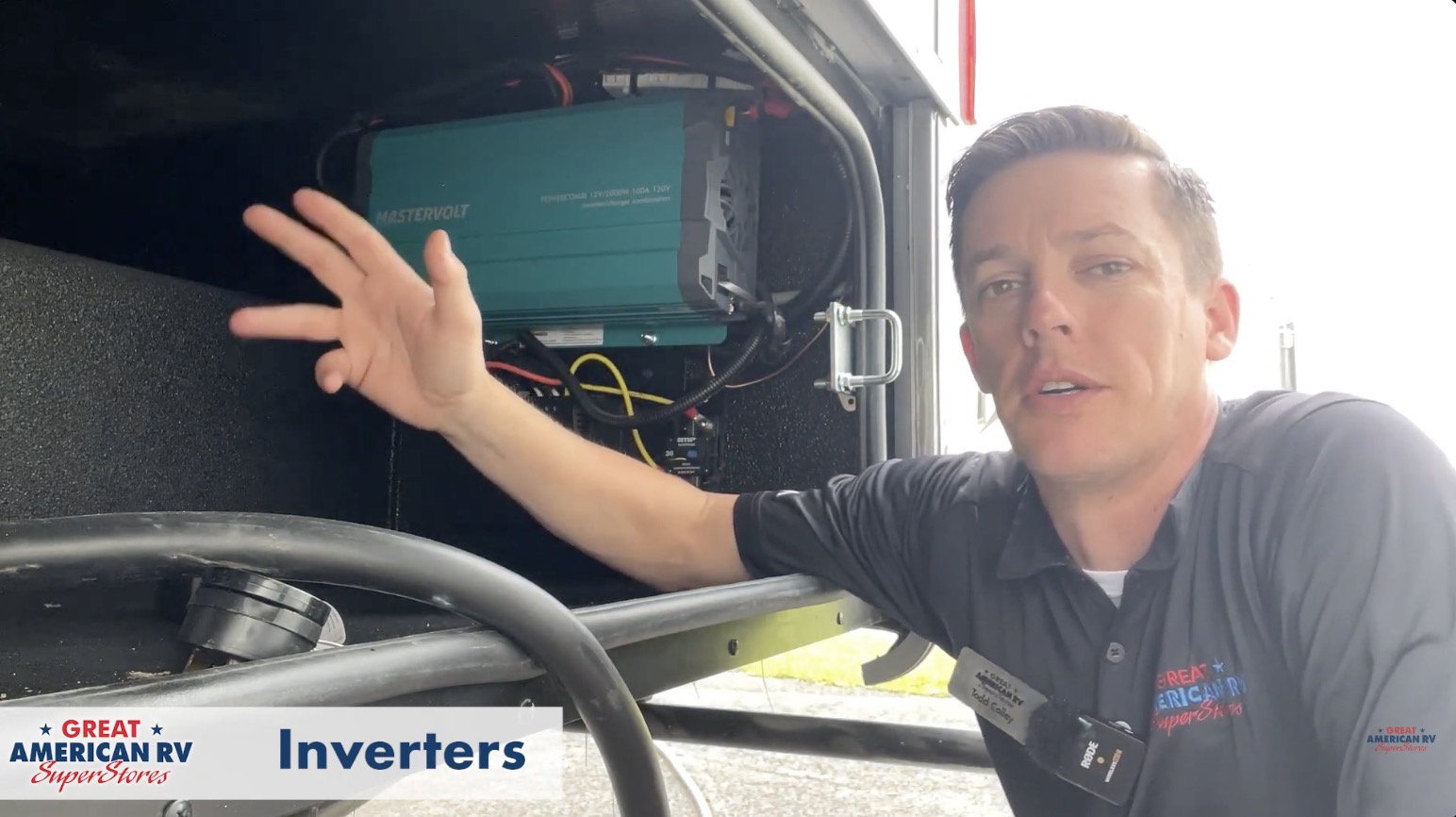
RV inverters are one of the most valuable upgrades — or factory features — for anyone who loves boondocking, dry camping, or simply wants more flexibility away from shore power pedestals. They quietly convert the 12-volt DC power stored in your RV’s house batteries into 110–120-volt AC household electricity, letting you run everyday appliances like coffee makers, microwaves, TVs, laptops, power tools, or even residential refrigerators without starting the generator or plugging in. In 2026, inverters have become standard or highly popular options in new travel trailers, fifth wheels, toy haulers, Class B camper vans, and many Class C and Class A motorhomes, especially as lithium battery banks, solar panels, and high-capacity inverters make true off-grid living more practical and affordable. With rising fuel costs and a growing desire for quiet, emission-free camping, inverters are now seen as essential for many owners who want to enjoy home-like comforts without constant generator use.
This comprehensive guide explains everything you need to know about RV inverters: what they do, the different types (modified sine wave vs pure sine wave), power ratings and sizing, input/output wiring, built-in protection features, how to tell if yours is working, step-by-step troubleshooting, common failure symptoms, battery bank requirements, solar and generator integration, maintenance best practices, safety considerations, off-grid runtime calculations, upgrading or adding an inverter to an older RV, real-world examples of inverter setups, and an expanded FAQ section based on real owner questions and service bay feedback in 2026. Understanding your inverter — and the battery system that feeds it — can dramatically improve your camping experience and prevent dead batteries or unexpected power loss.
At Great American RV SuperStores, we install, upgrade, and troubleshoot inverters almost every day. Most owner complaints boil down to the same issues: undersized inverters, weak or sulfated batteries, poor wiring connections, blown fuses, or trying to run too much load off-grid. Once you grasp the basics of how inverters interact with your batteries and other power sources, these problems become easy to avoid or fix.
Hey Happy Campers! Todd here with Great American RV SuperStores.
Today we’re taking a deep dive into RV inverters — what they really are, how they convert 12V DC to 120V AC, the differences between modified and pure sine wave models, how to size one correctly for your needs, input/output wiring and protection, step-by-step testing and troubleshooting, battery bank requirements for reliable runtime, integrating with solar, generators, and transfer switches, maintenance routines, safety tips, adding or upgrading an inverter, real-world off-grid examples, and answers to the questions we hear most often from owners in 2026.
If you’d prefer a step-by-step visual demo, check out the full walkthrough on the Great American RV YouTube channel in our Hap’s Helpful Hacks playlist.
Let’s make sure your inverter powers everything you need — without surprises!
What an RV Inverter Really Does
An inverter is an electronic device that changes direct current (DC) from your RV’s house batteries (usually 12V) into alternating current (AC) at 110–120 volts — the same type of power you get from a wall outlet at home. This allows you to run standard household appliances and electronics that were never designed for 12V DC.
Key roles in an RV:
- Powers 120V AC outlets (selected or whole-coach, depending on size).
- Runs sensitive electronics (laptops, TVs, gaming consoles, medical devices).
- Operates appliances like residential refrigerators, microwaves, coffee makers, or power tools.
- Provides “home-like” convenience while boondocking or dry camping.
Inverters do not:
- Charge batteries (that’s the converter’s job when on shore power).
- Replace shore power or a generator for high continuous loads (large inverters can, but battery capacity limits runtime).
- Work without sufficient battery power — they draw heavily from the battery bank.
In practice, inverters bridge the gap between shore power/generator and full battery-only camping. A well-sized inverter with a robust battery bank and solar can let you go days or weeks without plugging in or running the generator, which is a game-changer for quiet, eco-friendly camping.
Types of RV Inverters: Modified Sine Wave vs Pure Sine Wave
Modified Sine Wave (Modified Square Wave)
- Cheaper ($100–$500 for 1000–3000W).
- Simpler waveform — stepped approximation of a sine wave.
- Works for basic loads: lights, power tools, older TVs, simple chargers.
- May cause buzzing/humming in sensitive devices (audio equipment, microwaves, variable-speed motors).
- Less efficient with motors — can overheat or reduce lifespan.
- Common in budget or factory setups.
Pure Sine Wave
- More expensive ($300–$1,500+ for 2000–4000W).
- Clean, smooth waveform — identical to utility power.
- Safe for all electronics: laptops, TVs, medical equipment, variable-speed appliances, CPAP machines.
- Quieter, cooler, more efficient with motors.
- Recommended for modern RVs — especially with lithium batteries and solar.
In 2026, pure sine wave inverters dominate new installs and upgrades — brands like Victron, Xantrex, Go Power, Renogy, AIMS, and Magnum lead the market. Many owners upgrade from modified to pure sine wave after experiencing issues with sensitive devices.
Power Ratings and Sizing Your Inverter
Inverter size is measured in continuous watts and surge watts:
- Continuous: Steady power output (e.g., 2000W continuous).
- Surge: Short-term peak for motor startup (e.g., 4000W surge).
Common RV needs:
- Small loads (TV, chargers, lights): 1000–1500W.
- Residential fridge + outlets: 2000–3000W.
- Microwave + multiple outlets: 3000–4000W.
- Dual ACs or heavy loads: 4000W+ (requires massive battery bank).
Rule of thumb:
- Add up all expected simultaneous loads (watts).
- Add 20–50% headroom.
- Double for surge (motors draw 2–3× running watts on startup).
Battery bank sizing:
- 2000W inverter at full load ≈ 200A draw from 12V batteries.
- For 1 hour runtime: 200Ah usable capacity needed.
- Lead-acid/AGM: Use only 50% depth of discharge → 400Ah total.
- Lithium: 80–100% usable → 200–250Ah total.
Real-world example: A 2000W pure sine wave inverter with 400Ah lithium batteries and 600W solar can run a residential fridge (150W), lights, fans, and charging devices for 8–12 hours overnight, recharging during the day.
Input and Output Wiring Basics
Input Side (12V DC)
- Heavy cables (2/0 or 4/0 AWG) from battery positive/negative to inverter.
- Inline fuse or breaker near battery (within 7–12 inches).
- Solid, clean, tight connections — corrosion or loose cables cause voltage drop and failure.
Output Side (120V AC)
- Hardwired to sub-panel or select outlets.
- GFCI outlets recommended for safety.
- Dedicated circuit breakers in RV panel.
Built-In Protection Features
Most inverters include:
- Low-voltage shutdown (protects batteries from deep discharge).
- Over-voltage protection.
- Overload/over-temperature shutdown.
- Resettable breakers or fuses on AC output.
- Ground fault protection (some models).
- Remote on/off switch or display panel.
How to Tell If Your Inverter Is Working
- Turn inverter on (switch or remote).
- Test designated outlets with a simple load (lamp, phone charger).
- Voltage at outlet: 110–125V AC.
- Battery voltage drops slightly under load — normal.
- No output — check input fuse/breaker, battery voltage, connections.
Common Symptoms of Inverter Problems
- No AC output — Blown input fuse, low battery voltage, bad connections.
- Intermittent power — Loose cables, corrosion, overheating shutdown.
- Buzzing/humming — Modified sine wave with sensitive loads.
- Overload shutdown — Too much draw; reduce load.
- Won’t turn on — Low battery, remote fault, internal failure.
Step-by-Step Troubleshooting
- Verify battery voltage — 12.6V+ resting.
- Check input fuse/breaker near battery.
- Inspect cables — tight, no corrosion.
- Test output outlets — known good load.
- Listen for fan — runs when loaded or charging.
- Check remote/display — fault codes?
- Reset inverter — power off/on.
- Test with different load — isolate fault.
Preventive Maintenance Tips
- Inspect cables/connections monthly — clean terminals.
- Check input fuse/breaker annually.
- Keep inverter vents clean — dust causes overheating.
- Monitor battery health — weak batteries kill inverters.
- Run under load periodically — prevents stuck relays.
- Use pure sine wave for sensitive devices.
Safety Considerations
- High DC current — risk of arcing/explosion near batteries.
- Never work on wiring live.
- Use proper gauge cables and fuses.
- Install in ventilated area — heat buildup.
- GFCI outlets on inverter loads.
- Turn off before maintenance.
Expanded Frequently Asked Questions
How much power does a 2000W inverter draw from batteries? ~200A at full load (12V). Real-world average 50–100A.
Can I run my residential fridge on inverter? Yes — 150–300W running; 1000W+ inverter needed for startup surge.
Modified vs pure sine wave — which is better? Pure sine wave for all modern electronics; modified for basic loads.
Why does my inverter shut off randomly? Low battery voltage — shutdown protection.
How long can I run a 1000W load on 400Ah lithium? ~4–5 hours (80% usable capacity).
Best inverter brand for RV? Victron MultiPlus, Xantrex Freedom, Magnum, Go Power — reliable and serviceable.
Do I need a separate sub-panel? Recommended for large inverters — protects RV wiring.
Why buzzing in microwave on inverter? Modified sine wave — switch to pure sine.
Can inverter charge batteries? Some (inverter/chargers) yes — when on shore power.
How to size battery bank for inverter? Calculate load watt-hours + 20–50% headroom; lithium 80–100% usable.
What if inverter gets hot? Normal under load; ensure ventilation. Excessive heat = overload or fault.
Can I run AC unit on inverter? Only with 4000W+ inverter and large battery bank — rare for towables.
Why does inverter fan run constantly? High load or temperature — normal; check vents.
How to add inverter to older RV? Professional install — wire to battery, sub-panel, GFCI outlets.
The Bottom Line
An RV inverter turns battery power into household electricity for off-grid convenience. Size it correctly, use pure sine wave for sensitive devices, maintain batteries and connections, check fuses first for failures, and monitor voltage. With proper setup, it bridges the gap between shore power and boondocking perfectly.
By understanding:
- It converts 12V DC to 120V AC.
- Battery health is everything.
- Test and troubleshoot systematically.
- Size for real loads.
You’ll enjoy reliable power anywhere.
Watch the Full Video Walkthrough See everything demonstrated step-by-step in our Understanding RV Inverters video from the service team. Find it on the Great American RV SuperStores YouTube channel in the Hap’s Helpful Hacks playlist.
At Great American RV SuperStores, we don’t just sell RVs we help you understand how to use them. We’re making memories one weekend at a time. 🚐
*This content is not a legal standard or regulation, and does not create any new legal obligation. It is advisory in nature, informational in content, and is intended to assist and educate consumers in the use and enjoyment of their recreational vehicles. Great American RV SuperStores does not hereby make any warranty, express or implied, and does not assume any liability with respect to the use of, or damages resulting from the use of any information, method or process included in this content.
Recent Comments