Understanding Your Dometic RV Furnace: Operation, Troubleshooting, and Maintenance
A Dometic RV furnace is one of the most essential comfort systems for cold-weather camping, shoulder-season travel, and even chilly summer nights at higher elevations. It delivers warm air quickly and reliably using propane as the heat source and 12-volt DC power to run the blower fan and control board. When functioning correctly, it’s quiet, efficient, and keeps the entire coach comfortable. When it fails — no ignition, repeated clicking without flame, blower running but no heat, or complete silence — knowing how the system works and what to check first can save you from freezing nights, unnecessary service calls, or expensive towing.
This comprehensive guide covers everything you need to know about Dometic RV furnaces in 2026: how they operate (ignition sequence, blower delay, safety controls), key components (interior and exterior), safety priorities every owner must follow, step-by-step operation from the thermostat, common failure symptoms and their causes, detailed troubleshooting (starting with the easiest checks), electrical and propane diagnostics, reset procedures, maintenance that actually matters (exterior sealing, exhaust cleaning, bug prevention), winterizing and storage tips, off-grid battery considerations, integration with other RV systems (thermostats, zone controls), upgrade options (newer models, aftermarket controls), and an expanded FAQ section based on real owner experiences and Great American RV SuperStores service bay feedback. Proper understanding, basic maintenance, and prompt attention to small issues keep your Dometic furnace dependable and safe for years.
At Great American RV SuperStores, we service Dometic furnaces almost daily during winter prep, PDI inspections, and emergency calls. The most common complaints we hear are “it clicks but won’t light,” “blower runs but no heat,” “no power at all,” or “it shuts off after a few minutes.” Nine times out of ten, these trace back to simple, preventable causes: air in propane lines, low 12V voltage, blown fuses, dirty or blocked exhaust, tripped safety limits, or neglected annual maintenance. Once you know how the entire system works — from the thermostat signal to the burner flame — most of these problems become easy to diagnose and fix yourself.
Hey Happy Campers! Todd here with Great American RV SuperStores.
Today we’re going in-depth on Dometic RV furnaces — how the ignition sequence and blower operate, what each exterior component does, safety priorities you must never skip, step-by-step thermostat operation, common failure symptoms and why they happen, detailed troubleshooting starting with power and propane checks, reset procedures for lockouts and safety limits, maintenance that actually extends life (exterior sealing, exhaust cleaning, bug screens, reset switch checks), winterizing and storage procedures, off-grid battery considerations, integration with zone thermostats and control boards, upgrade options for 2026, and answers to the questions we hear most often from owners.
If you’d prefer a step-by-step visual demo, check out the full walkthrough on the Great American RV SuperStores YouTube channel in our Hap’s Helpful Hacks playlist.
Let’s make sure your furnace fires up reliably every cold night!
How a Dometic RV Furnace Works: The Complete Ignition Sequence
Dometic RV furnaces (common models: SF, SF-Q, SF-FQ, SF-PD series) are forced-air propane heaters that use 12V DC for controls and blower, and propane for the actual heat. The sequence is automatic and straightforward:
- Thermostat calls for heat — interior temperature drops below setpoint.
- 12V power reaches control board — must have 12.6V+ for reliable operation.
- Blower fan starts — runs 15–30 seconds to purge combustion chamber and prove airflow (sail switch confirms).
- Spark igniter clicks — DSI (Direct Spark Ignition) creates spark at burner.
- Gas valve opens — propane flows to burner tube.
- Burner ignites — steady blue flame established.
- Heat produced — blower pushes warm air through ducts to floor registers.
- Thermostat satisfied — gas valve closes, burner extinguishes.
- Blower continues 1–3 minutes — cool-down cycle to prevent heat damage and purge residual heat.
- System shuts off — waits for next call.
Normal sounds: blower startup whoosh, clicking igniter, steady jet-like burner roar, blower cool-down after flame off.
Warm air distribution: Vents closest to furnace blow hottest; farthest vents cooler due to duct length and heat loss — normal.
Safety Priorities Every Owner Must Follow
Propane appliances demand respect — safety is non-negotiable:
- Test CO and Smoke Detectors — Press test button monthly; loud alarm confirms operation. Replace batteries annually.
- Annual Propane System Leak Check — Professional inspection of lines, regulator, connections — hidden leaks are dangerous.
- Never Operate If You Smell Gas — Shut propane tanks off, ventilate RV, do not ignite anything — evacuate if strong odor.
- Keep Exhaust Clear — Inspect exterior vent for blockages (spider webs, mud dauber nests, debris) — restricted exhaust causes poor combustion, soot, shutdowns.
- ECO and Limit Switches — Overheat protection — if tripped, reset or service required.
- Never Use Furnace for Pre-Heating — While driving or in enclosed spaces — CO risk.
- Install CO Detectors — One near sleeping areas and one near furnace if not already present.
Exterior Components and Their Functions
Depending on model, you’ll see one of two exterior styles:
- Silver Exhaust Cover Only — Small vent cap; service access from inside RV.
- Larger Rectangular Access Panel — Full panel; easier inspection and service.
Behind the panel or cover:
- Pressure Relief Valve — Opens at 150 PSI or 210°F — drips occasionally normal (thermal expansion); constant drip = restore air pocket.
- Gas Valve — Controls propane flow; igniter clicks when activated.
- Burner Tube/Exhaust — Blue flame burns here; hot exhaust exits.
- Control Board — Manages ignition, blower, safety limits; LED may flash codes.
- Sail Switch — Proves blower airflow before allowing ignition.
- ECO/Limit Switch — Overheat shutdown — reset if tripped.
- Reset Switch — Manual reset on some models for lockouts.
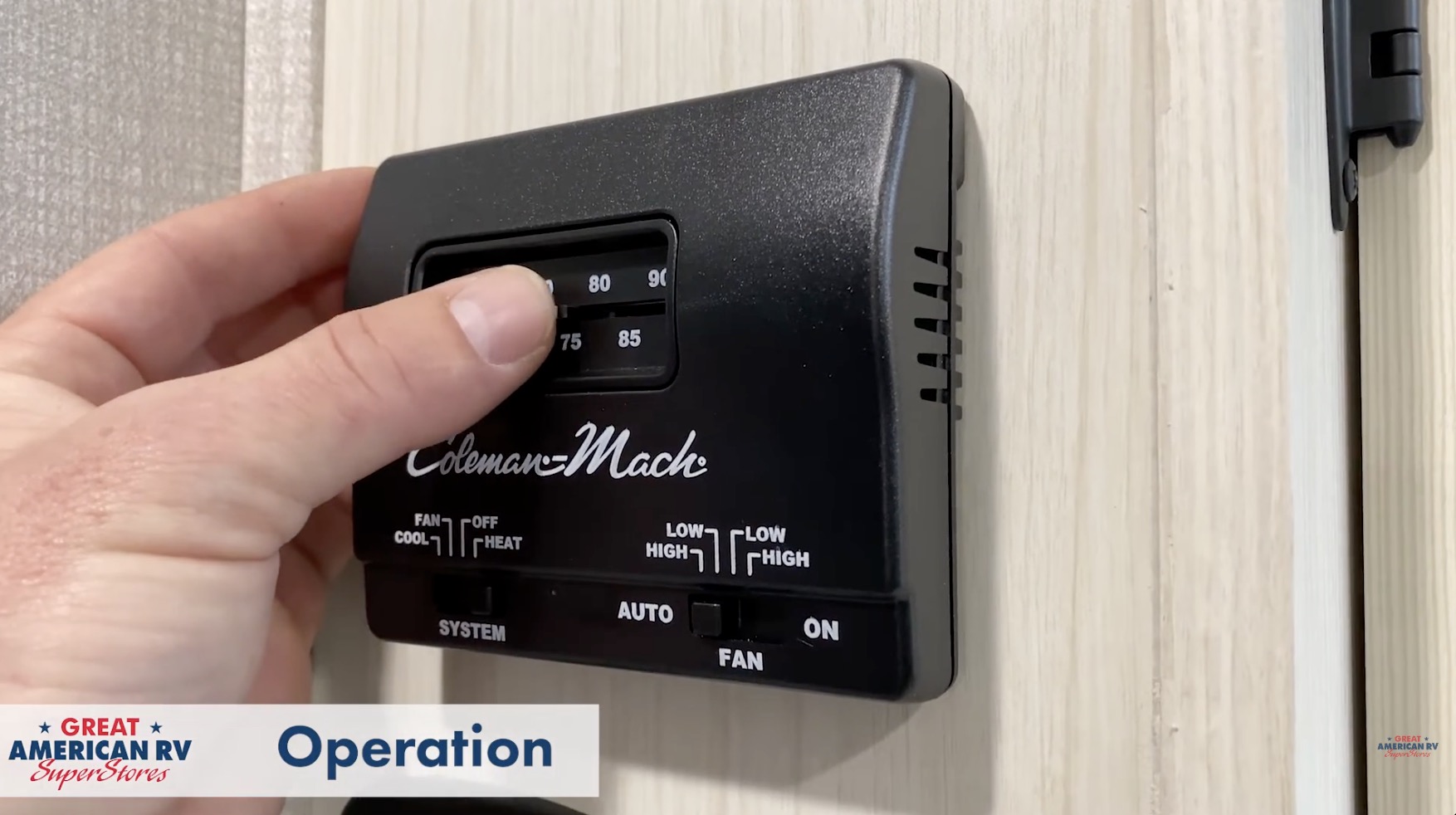
Operation Step-by-Step from the Thermostat
- Ensure propane tanks full, valves open.
- Set thermostat to “Heat” or “Furnace” mode (not electric heat pump).
- Raise setpoint above current interior temperature.
- Blower starts → clicking igniter → burner lights (steady blue flame).
- Warm air flows from vents.
- Thermostat satisfied → burner off, blower cool-down, system idle.
If no ignition after 3–4 tries → lockout. Turn thermostat off 30 seconds, then on to retry.
Routine Maintenance That Actually Matters
- Annual Exterior Inspection — Check sealant around access panel — re-caulk if cracked to prevent water intrusion.
- Clean Exhaust Tube — Use compressed air to blow out dirt, soot, spider webs, insect nests — restricted airflow causes shutdowns.
- Bug Screens — If installed, check/clean — remove if airflow restricted (many manufacturers recommend no screen during use).
- Burner Tube — Inspect/clean annually — remove debris, ensure blue flame.
- Sail Switch — Clean if dusty — prevents ignition if stuck open.
- 12V Power — Maintain batteries — low voltage causes most failures.
- Exercise Monthly — Run furnace 10–15 minutes even in summer — keeps parts moving, identifies issues early.
Troubleshooting Common Failures
Clicks but No Ignition/Lockout
- Air in lines — purge via stove burners.
- Low 12V — charge batteries, check fuses.
- Dirty sail switch — clean.
- Bad electrode — clean/re-gap.
- Faulty gas valve — service required.
Blower Runs, No Heat
- Sail switch stuck — clean or replace.
- Limit switch tripped — reset or check airflow.
- Control board fault — LED flash codes help diagnose.
No Power at All
- Battery disconnect OFF — turn ON.
- Blown fuse — check 12V panel (furnace fuse usually 15–20A).
- Low battery voltage — charge or test batteries.
Burner Lights but Shuts Off Quickly
- Overheat limit tripped — check airflow, clean exhaust.
- Poor combustion — dirty burner, restricted intake/exhaust.
Winterizing and Storage Procedures
- Turn furnace switch off.
- Drain water lines — furnace does not hold water but protect RV plumbing.
- Clean exhaust — prevent insect nests during storage.
- Disconnect battery or use maintainer — prevents drain.
- Exercise before next season — run 10–15 minutes.
Off-Grid Battery Considerations
- Blower draws 7–12A — furnace uses significant 12V.
- Maintain 12.6V+ — low voltage causes lockouts.
- Solar/lithium ideal for extended winter boondocking.
Upgrade Considerations for 2026
- Newer Dometic models — improved ignition, quieter blowers.
- Aftermarket controls — Bluetooth monitoring.
- Larger BTU units — faster heat for big rigs.
Expanded Frequently Asked Questions
How often clean exhaust? Annually — more if stored outdoors.
Why clicks but no flame? Air in lines, low 12V, dirty sail switch — purge and charge first.
Blower runs but no heat? Sail switch or limit switch — clean/reset.
No power at all? Disconnect ON? Fuse blown? Low battery?
Safe to run overnight? Yes — CO detectors active; ensure ventilation.
How long should furnace run on 20 lb tank? ~40–60 hours intermittent use (varies by BTU).
Can I use furnace while driving? No — CO risk; some models interlocked.
Why furnace shuts off quickly? Overheat limit — check airflow/exhaust.
Best way to purge air? Light stove burners first — steady flame, then try furnace.
What does ECO tripped mean? Overheat — reset, check airflow.
Can I add electric heat strip? Some models yes — conversion kit.
Why sulfur smell? Burner adjustment or propane quality — service.
The Bottom Line
Dometic RV furnaces are reliable propane heaters that depend on solid 12V power, clean propane supply, and basic maintenance. Start with voltage, fuses, and propane checks for most issues; clean exhaust, maintain batteries, and exercise regularly to prevent problems.
By following these steps:
- Ensure strong 12V and propane supply.
- Clean exhaust and sail switch annually.
- Reset lockouts properly.
- Maintain safety detectors.
You’ll stay warm and safe every cold night.
Watch the Full Video Walkthrough See everything demonstrated step-by-step in our Understanding Your Dometic RV Furnace video from the service team. Find it on the Great American RV SuperStores YouTube channel in the Hap’s Helpful Hacks playlist.
At Great American RV SuperStores, we don’t just sell RVs we help you understand how to use them. We’re making memories one weekend at a time. 🚐
*This content is not a legal standard or regulation, and does not create any new legal obligation. It is advisory in nature, informational in content, and is intended to assist and educate consumers in the use and enjoyment of their recreational vehicles. Great American RV SuperStores does not hereby make any warranty, express or implied, and does not assume any liability with respect to the use of, or damages resulting from the use of any information, method or process included in this content.
Recent Comments