Understanding Your Suburban Tanked RV Water Heater
Operation • Maintenance • Troubleshooting • Owner FAQs
Hot water in your RV isn’t just a convenience — it’s part of what makes camping comfortable. Whether you’re taking a shower after a long travel day, washing dishes at the campsite, or cleaning up before bed, your water heater plays a big role in the overall camping experience.
Suburban tanked water heaters are one of the most common systems installed in travel trailers and fifth wheels today. They are simple, reliable, and durable when they’re operated correctly and maintained on a regular schedule.
At Great American RV SuperStores, we believe understanding your RV systems prevents unnecessary service visits and gives you confidence when you’re out enjoying the road.
Hey Happy Campers!
Todd here with Great American RV SuperStores.
Today we’re walking through everything you need to know about your Suburban tanked RV water heater — how it works, how to operate it safely, how to maintain it properly, and how to troubleshoot common issues before scheduling service.
If you’d rather see everything demonstrated step-by-step, you can also watch the full walkthrough on the Great American RV YouTube channel in our Hap’s Helpful Hacks playlist.
Let’s get into it.
What Makes Suburban Water Heaters Different
Suburban water heaters use a porcelain-lined steel tank that is protected by a sacrificial anode rod.
The anode rod is extremely important. It attracts corrosive minerals in the water and sacrifices itself so the steel tank does not rust. As the rod slowly deteriorates, it protects the inside of the tank from corrosion.
Because of this design, Suburban water heaters require anode rod inspection and replacement as part of normal maintenance.
Common models include:
SW6 — 6 gallon tank
SW10 — 10 gallon tank
The number refers to tank size in gallons.
Some models operate on propane only, while others are combination units that run on both propane and 120-volt electric heating.
Regardless of the model, the basic operating principles are the same.
Safety First
Before operating any propane appliance in your RV, a few safety checks are important.
- Never operate the water heater if you smell propane
- Ensure smoke and carbon monoxide detectors are functioning
- Turn the water heater OFF while refueling your RV
- Never operate the heater without water in the tank
- Keep the exterior water heater compartment clear of debris
Your Suburban heater also includes a Temperature and Pressure Relief Valve (T&P valve) rated at 210°F and 150 PSI.
This safety valve prevents dangerous pressure buildup inside the tank.
You may occasionally notice a small amount of water dripping from this valve during heating. This can be normal due to thermal expansion. However, continuous dripping or steady flow is not normal and should be inspected.
Also remember that hot water can cause burns. Always test water temperature carefully before use.
How the System Works
Your Suburban water heater may use three power sources depending on how your RV is equipped.
12-Volt DC Power
This runs the control board and ignition system.
Propane (LP Gas)
This provides the heat source for the burner.
120-Volt AC Power
Combination models include an electric heating element powered by shore power.
One thing many RV owners don’t realize is that propane mode still requires 12-volt power. If your RV batteries are weak or the converter is not supplying power, the heater may fail to ignite even with a full propane tank.
Low battery voltage is one of the most common reasons water heaters fail to start.
Step One: Always Fill the Tank First
Before turning on the water heater, the tank must be completely full of water.
Follow these steps:
- Connect your RV to city water or turn on the water pump.
- Open a hot water faucet inside the RV.
- Allow water to run until all air is purged and a steady stream flows.
Only after the tank is confirmed full should the water heater be turned on.
Running the electric heating element without water in the tank is called dry firing. Dry firing will permanently damage the heating element almost instantly, and this type of damage is not covered under warranty.
Propane Mode Operation
When propane mode is turned on, the water heater begins an automatic ignition process.
The control board will:
- Open the gas valve
- Activate the igniter
- Attempt to ignite the burner
Once the burner lights, you should see a steady blue flame through the burner area.
If ignition fails, the system will retry several times. After multiple failed attempts, the system will enter DSI lockout mode.
To reset the system:
Turn the switch OFF, wait several seconds, then turn it back ON.
If the heater repeatedly locks out, troubleshooting or service may be required.
Electric Mode Operation
Combination models include a 120-volt electric heating element.
For electric mode to operate:
- The RV must be connected to shore power or generator power
- The breaker must be ON
- The electric switch must be ON
Many RVs include two electric switches:
• An interior wall switch
• An exterior switch behind the water heater access panel
If propane works but electric does not, the exterior switch is often the issue.
Running Propane and Electric Together
Yes, Suburban combination water heaters are designed to run both propane and electric at the same time.
Running both increases the recovery rate, which means the water reheats faster.
This is especially useful when:
- Multiple people are showering
- Dishes are being washed
- Guests are staying in the RV
Understanding Recovery Rate
One thing many RV owners don’t realize is that a typical RV water heater only holds six gallons of water. That can go pretty quickly during a shower, especially if campground water pressure is strong.
Recovery rate refers to how quickly the water heater can heat new water entering the tank after hot water is used.
Propane mode generally heats water faster than electric mode.
Running both propane and electric at the same time significantly improves recovery rate. This allows the heater to keep up with demand when hot water is being used frequently.
Many experienced campers also use the navy shower method — turning water off while soaping up — which helps extend hot water availability even further.
Water Heater Components Explained
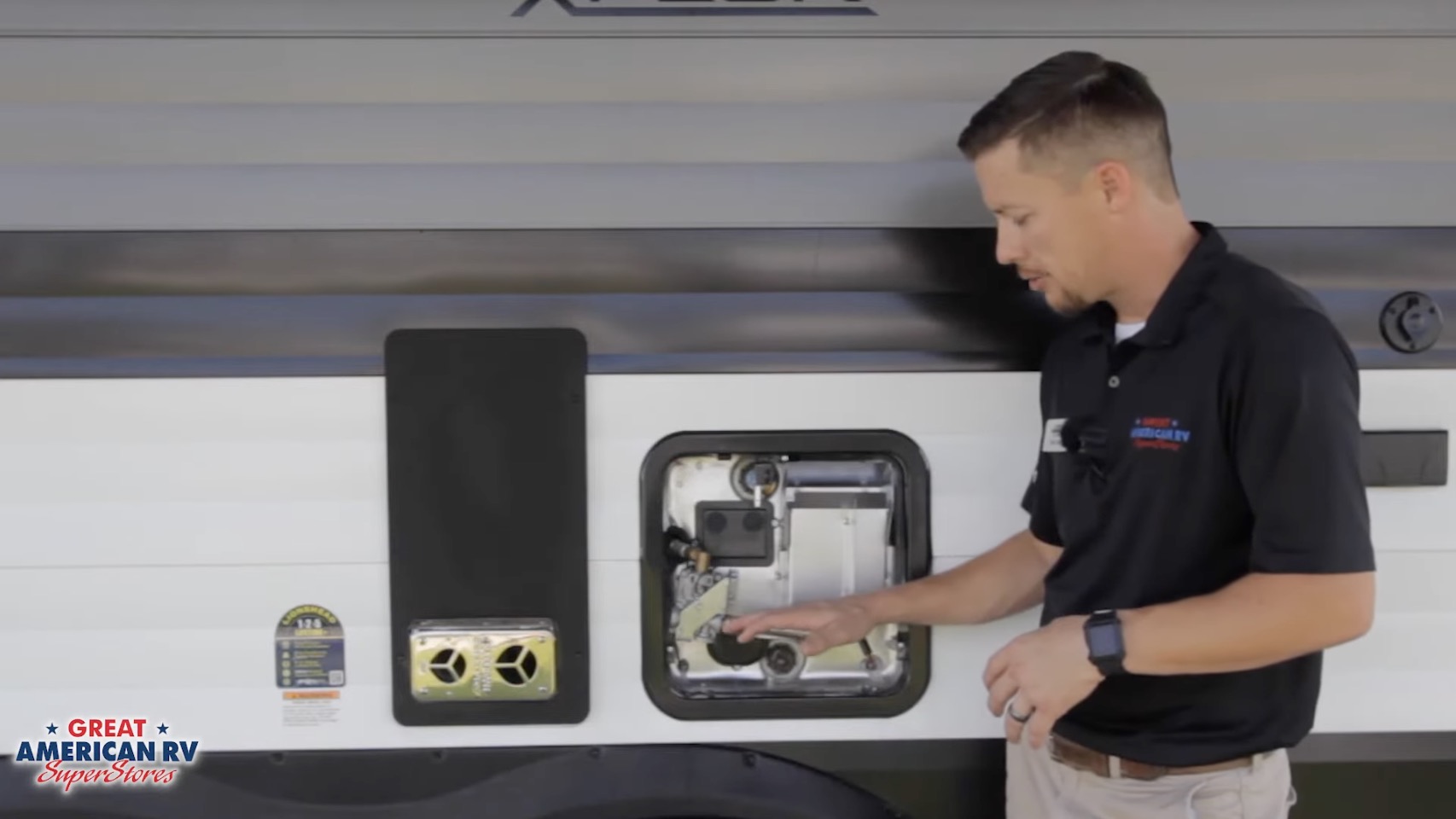
Behind the exterior access panel are several important components that allow the water heater to operate.
Burner Tube
Where propane mixes with air and ignites to heat the tank.
Igniter Electrode
Creates the spark used to ignite the propane burner.
Gas Valve
Allows propane to flow to the burner when the heater is operating.
Thermostat
Monitors water temperature and cycles the heater on and off.
ECO Switch (Energy Cut Off)
A safety switch that shuts down the heater if it overheats.
Electric Heating Element
Used when operating in electric mode on combination models.
Anode Rod
Protects the steel tank from corrosion and also serves as the drain plug.
Common Mistakes We See in Service
Many service visits happen because of simple operating mistakes.
The most common ones include:
- Turning the heater on before filling the tank
- Ignoring the anode rod
- Never flushing sediment buildup
- Leaving electric mode on during winterization
- Operating with weak RV batteries
Most water heater problems are completely preventable with basic maintenance.
Annual Maintenance
Suburban recommends inspecting and flushing the water heater at least once per year.
Maintenance steps include:
- Turn OFF propane and electric switches
- Disconnect 120-volt power
- Shut off water supply
- Open a hot water faucet
- Remove the drain plug / anode rod
- Lift the relief valve to release pressure
- Allow the tank to drain
- Flush sediment from the tank
If the anode rod is 75% deteriorated, it should be replaced.
Winterizing Your Water Heater
Before freezing temperatures arrive:
- Turn off propane and electric modes
- Shut off the water supply
- Remove the anode rod
- Open the pressure relief valve
- Allow the tank to drain completely
Most RVs include a water heater bypass system so antifreeze does not fill the tank.
Expanded Frequently Asked Questions
How long does it take to heat water?
Propane mode usually heats water faster than electric mode. Running both propane and electric together provides the fastest recovery rate.
Why does my hot water run out so fast?
Most RV water heaters hold only six gallons. Efficient shower habits and running both propane and electric modes can help extend hot water availability.
Why does my water heater make popping noises?
Rumbling or popping sounds are often caused by sediment buildup in the bottom of the tank. Flushing the tank annually usually resolves this issue.
Why does my hot water smell like rotten eggs?
A sulfur smell can occur when bacteria react with the anode rod and minerals inside the tank. Flushing the system and replacing the anode rod often resolves the issue.
Do I need a water pressure regulator?
Yes. Many campground water systems exceed 80 PSI, which can cause plumbing leaks or force water out of the relief valve.
How often should the anode rod be replaced?
Inspect it annually and replace it if approximately 75% deteriorated.
Can I leave the heater on all the time?
Many campers do while staying at a campsite, but turning it off when not needed conserves propane and electricity.
The Bottom Line
Suburban tanked water heaters are durable, reliable systems when operated correctly and maintained regularly.
By following a few simple rules:
- Always fill the tank before turning it on
- Maintain proper battery voltage
- Replace the anode rod annually
- Flush sediment from the tank
- Winterize properly
You can keep your water heater operating smoothly for many years.
Watch the Full Video Walkthrough
If you’d rather see everything demonstrated step-by-step, watch the Suburban water heater walkthrough from our service team.
You can find it on the Great American RV SuperStores YouTube channel and in the Hap’s Helpful Hacks playlist.
At Great American RV SuperStores, we don’t just sell RVs — we help you understand how to use them.
We’re making memories one weekend at a time. 🚐
*This content is not a legal standard or regulation, and does not create any new legal obligation. It is advisory in nature, informational in content, and is intended to assist and educate consumers in the use and enjoyment of their recreational vehicles. Great American RV SuperStores does not hereby make any warranty, express or implied, and does not assume any liability with respect to the use of, or damages resulting from the use of any information, method or process included in this content.
Recent Comments