Towing Capacity Guide: What Can Your Truck Really Pull?
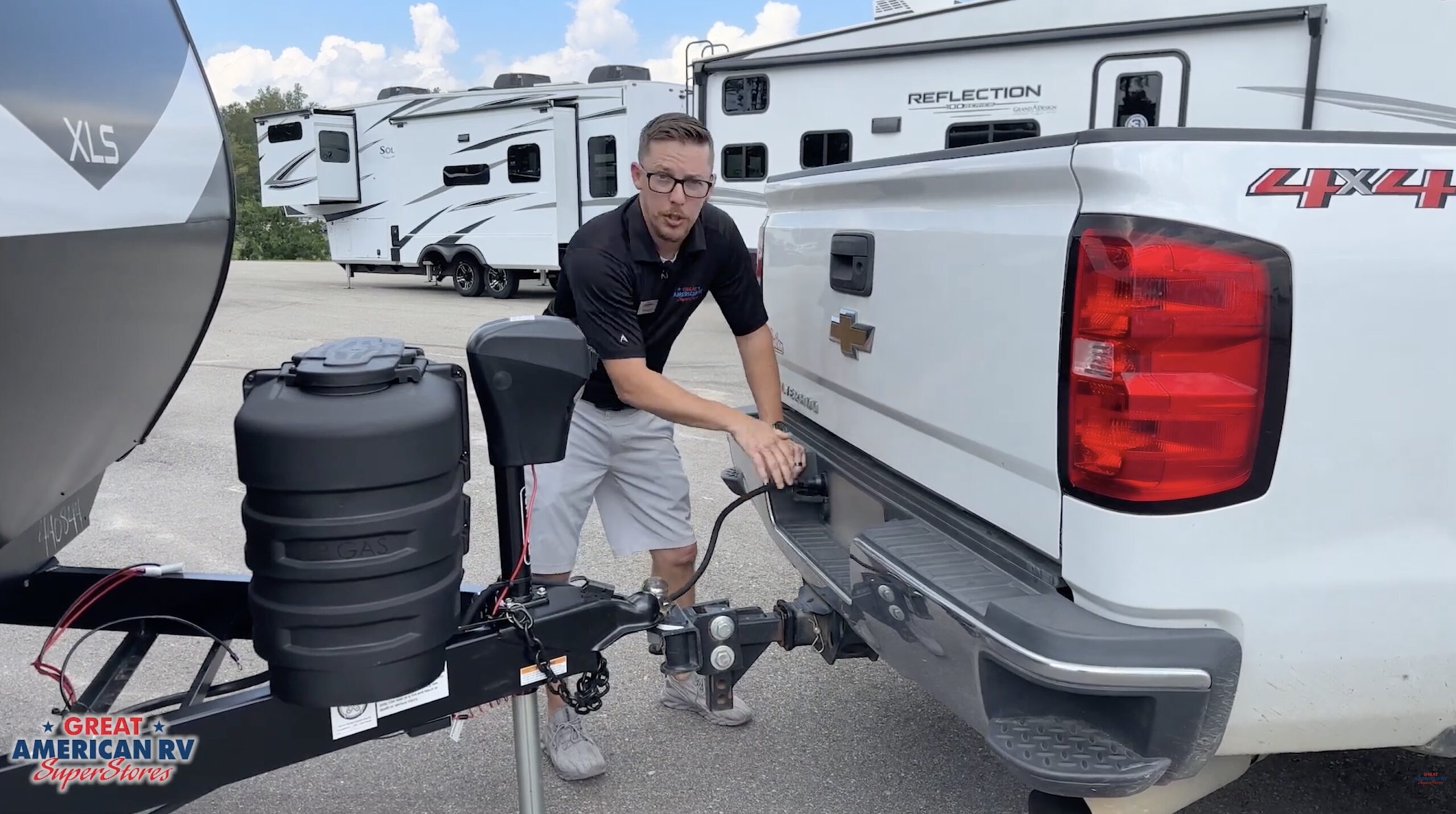
Hey fellow campers—nothing beats hooking up the RV on a Friday afternoon, tossing in the coolers, bikes, and fishing gear, and heading out for a quick escape with the family. But before you hitch up that shiny new travel trailer or fifth wheel, there’s one critical question you need to answer honestly: What can your truck really pull?
That’s where a solid RV towing capacity guide comes in. Over-towing isn’t just uncomfortable—it’s dangerous. It can wreck your transmission, overheat brakes, cause sway that’ll white-knuckle the whole drive, or worse. We’re responsible for keeping everyone safe while still making those memories happen.
At Great American RV SuperStores, we’ve been helping families like yours for over 40 years. As a family-owned and operated business with 9 SuperStores across Louisiana (Breaux Bridge and Hammond), Mississippi (Hattiesburg and Tupelo), Alabama (Calera, Grand Bay, Heflin, and Huntsville), and Florida (DeFuniak Springs), we know towing inside and out. Our 150 service bays are ready for everything from brake inspections to hitch installations, and our on-site Camping Stores stock weight-distribution hitches, sway bars, and gear you actually need. With an A+ rating from the BBB and membership in the Priority RV Network (all locations except Huntsville), we stand behind every rig we sell. We carry a huge selection of the hottest RV brands like Tiffin, Jayco, Airstream, Venture RV, Entegra, Thor, and many more—so you can find the perfect match for your truck and your weekend adventures.
Let’s break it all down like we’re standing in the lot chatting over a cold drink: how to find your truck’s tow rating, what all those confusing numbers on the RV spec sheet actually mean, the key factors that affect real-world towing, and smart tips to stay safe and legal.
Step 1: Finding Your Truck’s Real Towing Capacity
The first number every weekend warrior dad needs is his truck’s maximum towing capacity—the heaviest trailer it can safely pull under ideal conditions. But here’s the truth: that big number on the dealer sticker or in the brochure is often the “best-case” scenario (think long-bed, regular cab, 2WD, no options, perfect weather).
To get the accurate picture for your specific truck:
- Check the owner’s manual — Look in the towing section. Most modern trucks (Ford F-150, Chevy Silverado, Ram 1500/2500, etc.) have detailed charts based on engine, axle ratio, cab style, bed length, and whether you have the towing package.
- Look at the driver’s side door jamb sticker — This is gold. It lists your truck’s GVWR (Gross Vehicle Weight Rating), GCWR (Gross Combined Weight Rating), GAWR (Gross Axle Weight Ratings), and often payload capacity.
- Use the manufacturer’s towing guide or online calculator — Ford, Chevy, Ram, Toyota, and Nissan all have VIN-specific or model-specific towing calculators on their websites. Plug in your exact configuration for the most precise numbers.
- Calculate real-world towing capacity — Subtract your truck’s actual loaded weight (curb weight + passengers + cargo + full fuel + accessories) from the GCWR. What’s left is what you can safely add as trailer weight.
Knowing your real payload and tongue-weight limits prevents nasty surprises.
Remember, towing capacity isn’t just about the engine and hitch. It’s limited by brakes, cooling system, suspension, tires, and axle strength. A half-ton truck might advertise 12,000+ lbs towing, but once you load the family, cooler, and tools in the bed, that number drops fast.
Understanding the Alphabet Soup: RV Weight Terms Explained
RV spec sheets love throwing around acronyms. As a weekend warrior dad, you don’t need to become an engineer—you just need to know what matters for safe towing.
- Dry Weight / Unloaded Vehicle Weight (UVW): This is the RV as it rolls off the factory floor—no water, no propane, no cargo, no options. Think of it as the “base weight.” It’s useful for comparison but never what you’ll actually tow.
- Gross Vehicle Weight Rating (GVWR): The single most important number for your trailer. This is the absolute maximum the RV can weigh when fully loaded with water, propane, food, clothes, toys, and people. Exceeding GVWR is illegal and dangerous—tires can blow, axles can fail, and handling goes out the window.
- Cargo Carrying Capacity (CCC) or Payload Capacity: GVWR minus UVW (plus any factory options already added). This tells you how many pounds of “stuff” you can safely add. Weekends with the family add up fast—coolers, bikes, generator, grills, kids’ gear. Many dads are shocked to learn their dream 30-foot trailer only has 1,500–2,500 lbs of real payload.
- Gross Trailer Weight (GTW) or Gross Vehicle Weight (GVW) when loaded: The actual scale weight of your fully loaded trailer. Always weigh it fully packed before long trips.
- Tongue Weight (or King Pin Weight for fifth wheels): The downward force the trailer puts on your truck’s hitch ball (usually 10–15% of the loaded trailer weight for bumper-pull trailers; 20–25% for fifth wheels). Too little tongue weight causes sway. Too much overloads your truck’s rear axle and reduces steering control.
- Gross Combined Weight Rating (GCWR): The maximum combined weight of your fully loaded truck + fully loaded trailer. This is the big safety ceiling set by your truck manufacturer. Stay under it and you’re generally good.
- Gross Axle Weight Rating (GAWR): Max weight each axle (front and rear on truck, or each on trailer) can carry. Overloading one axle—even if total weight is okay—causes poor handling and premature tire wear.
Real-world example: You see a travel trailer listed at 7,500 lbs dry weight with a GVWR of 9,900 lbs. After adding water (500+ lbs), propane, and weekend gear for four people, you might hit 9,200 lbs actual. Your truck needs a towing capacity well above that (ideally with a safety buffer) and enough payload left for proper tongue weight.
Our sales teams at all 9 Great American RV SuperStores locations walk every customer through these numbers using the specific truck and RV they’re considering. We’ve helped thousands of Gulf South dads avoid the “it looked fine on paper” regret.
Key Factors That Affect What Your Truck Can Really Pull
Towing capacity on paper is one thing. Real-world performance is another. Here are the biggest factors every weekend warrior dad needs to consider:
- Payload vs. Towing — Many dads focus only on towing capacity and forget payload. Your truck’s rear axle has to handle the tongue weight plus everything in the bed and cab. A heavy tongue weight can push you over GAWR even if total towing looks okay.
- Weight Distribution and Sway Control — Proper loading (heavy items low and centered in the trailer) makes a huge difference. A weight-distribution hitch with sway control is often non-negotiable for trailers over 5,000–6,000 lbs. Our Camping Stores carry trusted brands and our technicians install them right.
- Hitch Setup and Receiver Rating — Make sure your hitch, ball mount, and receiver are all rated for the job. Class IV or V hitches are common for bigger RVs.
- Truck Configuration — 4WD vs 2WD, engine size, axle ratio (higher numerical ratio usually means better towing), transmission cooler, and towing package all matter.
- Weather and Terrain — Hills, wind, heat, and rain reduce effective capacity. Mountain passes or Gulf Coast crosswinds can turn a marginal setup into a white-knuckle experience.
- Tires, Brakes, and Maintenance — Worn tires or brakes on either vehicle drastically cut safe towing limits. Schedule a full safety inspection in one of our 150 service bays before every season.
- The 80% Rule — Many experienced RVers (and our service advisors) recommend keeping your loaded trailer weight at or below 80% of your truck’s maximum towing capacity. It gives you margin for safety, better fuel economy, and less stress.
- Legal Limits — Every state has rules on trailer brakes (usually required above 3,000 lbs), lighting, safety chains, and maximum lengths. Know the laws for your Gulf Coast routes.
Smart Towing Tips
- Weigh everything — Use a CAT scale or public scale. Weigh the truck alone, then truck + trailer. Check tongue weight with a scale.
- Load smart — Put 60% of cargo weight in the front half of the trailer. Secure everything so it doesn’t shift.
- Practice — Empty parking lots are your friend. Learn how your rig handles turns, backing, and emergency stops before hitting the interstate.
- Drive defensively — Increase following distance, go slower on hills and curves, and use tow/haul mode. Downshift instead of riding brakes.
- Upgrade when ready — If your current truck is maxed out, come see us. We can help match you with the right Jayco, Thor, or Airstream that fits your existing truck—or help you step up to a heavier-duty tow vehicle.
At Great American RV SuperStores, we don’t just sell RVs. We help you build safe, reliable weekend setups that last. Whether you need a simple hitch upgrade, a full service check in one of our 150 bays, or expert advice on pairing your new travel trailer or 5th wheel with your truck, our family-owned team has your back.
Common Towing Myths Busted
- “Dry weight is what matters” — No. Always use GVWR and actual loaded weight.
- “If the truck moves it, it’s fine” — Moving and safely controlling are two different things.
- “Bigger truck = no worries” — Even heavy-duty trucks have payload and GCWR limits.
- “Tongue weight doesn’t matter much” — It’s one of the biggest causes of sway and handling issues.
Ready to Tow Smarter?
Understanding your rv towing capacity guide numbers turns you from a nervous tow driver into a confident captain who actually enjoys the drive. You’ll arrive at the campground relaxed, with the family excited instead of stressed.
Stop by any of our 9 Great American RV SuperStores locations across the Gulf South. Let our experienced team run the numbers on your truck, walk you through spec sheets on the latest Tiffin, Jayco, Airstream, Venture RV, Entegra, Thor models, and more. With 40+ years as a family-owned business, an A+ BBB rating, Priority RV Network support, and 150 service bays ready when you need them, we make sure your towing setup is safe, capable, and fun.
Your next weekend adventure is waiting—make sure your truck can pull it comfortably and safely. See you on the lot, and safe travels!
Recent Comments